



How Water‑Jet Cutting Works: A Heat‑Free, Precision‑Cutting Technology
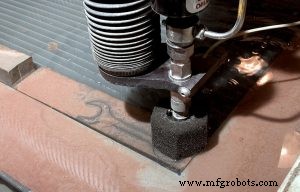
Cutting is a foundational operation in manufacturing, transforming raw materials into finished components. Among the various techniques, water‑jet cutting stands out for its versatility and precision. By harnessing a stream of ultra‑high‑pressure water, it slices through metals, composites, ceramics, and even soft plastics without generating heat or fumes.
How Water‑Jet Cutting Works
A water‑jet system consists of a pressurized water source, a high‑pressure pump, and a fine‑nozzle that delivers the stream to the workpiece. The water is first pumped to pressures ranging from 30 000 psi to 100 000 psi—well beyond the tensile strength of most materials—before it exits the nozzle at velocities exceeding 2,500 mph. Operators guide the nozzle across the material’s surface; the kinetic energy of the jet dislodges microscopic particles, effectively severing the substrate.
For tougher substrates, manufacturers often add a small percentage of abrasives (silicon carbide or garnet) to the water stream. The abrasive particles enhance cutting speed and improve edge quality, especially on hard metals like titanium or hardened steel.
Key Advantages
- Heat‑Free Cutting – The absence of thermal energy preserves the mechanical properties of heat‑sensitive materials, preventing warping, residual stresses, or distortion.
- No Emissions – Pure water (and optional abrasives) produces zero hazardous fumes, making the process safe for operators and compliant with stringent environmental regulations.
- Exceptional Accuracy – Modern CNC‑controlled water‑jet machines achieve tolerances down to ±0.02 in., ideal for precision parts and intricate designs.
- Versatility – The same equipment can cut aluminum, steel, glass, stone, rubber, and even thin layers of asphalt, offering a single solution for diverse material needs.
- Minimal Waste – Because the cut edge is clean and burr‑free, downstream machining is often unnecessary, reducing material waste and labor costs.
Water‑jet cutting is increasingly adopted in aerospace, automotive, medical device, and architectural fabrication due to its combination of speed, safety, and environmental responsibility.
In summary, water‑jet cutting provides a non‑contact, clean, and highly adaptable method for modern manufacturing.
Industrial equipment
- Electrical Grounding Explained: Safeguarding Systems from Arcing and Fires
- Abrasive Jet Machining: How It Works, Benefits, and Practical Applications
- 5 Key Advantages of Water Jet Cutting for Modern Manufacturing
- How a Car Radiator Works: Inside the Cooling System
- Maximize Efficiency of Your Water Jet Cutting Machine
- Understanding Laser Cutting Machines: How They Work
- How Waterjet Cutting Machines Work: Precision Metal Fabrication Explained
- Abrasive Water Jet Machining: Precision Cutting for Modern Manufacturing
- Understanding Overrunning Clutches: How They Operate and Why They Matter
- How a 3D Pen Works: From Filament to Finished Model