



How Waterjet Cutting Machines Work: Precision Metal Fabrication Explained
A waterjet cutting machine is a tool capable of slicing into metal and other materials using a jet of water at high velocity and pressure. Sometimes, waterjets will propel a mixture of water and an abrasive substance to improve the cut. Waterjet cutters are extremely useful tools in metal fabrication to make accurate, precise cuts without changing the intrinsic properties of the material being cut. Read below for a complete breakdown of how a waterjet cutter works.
Basic Process
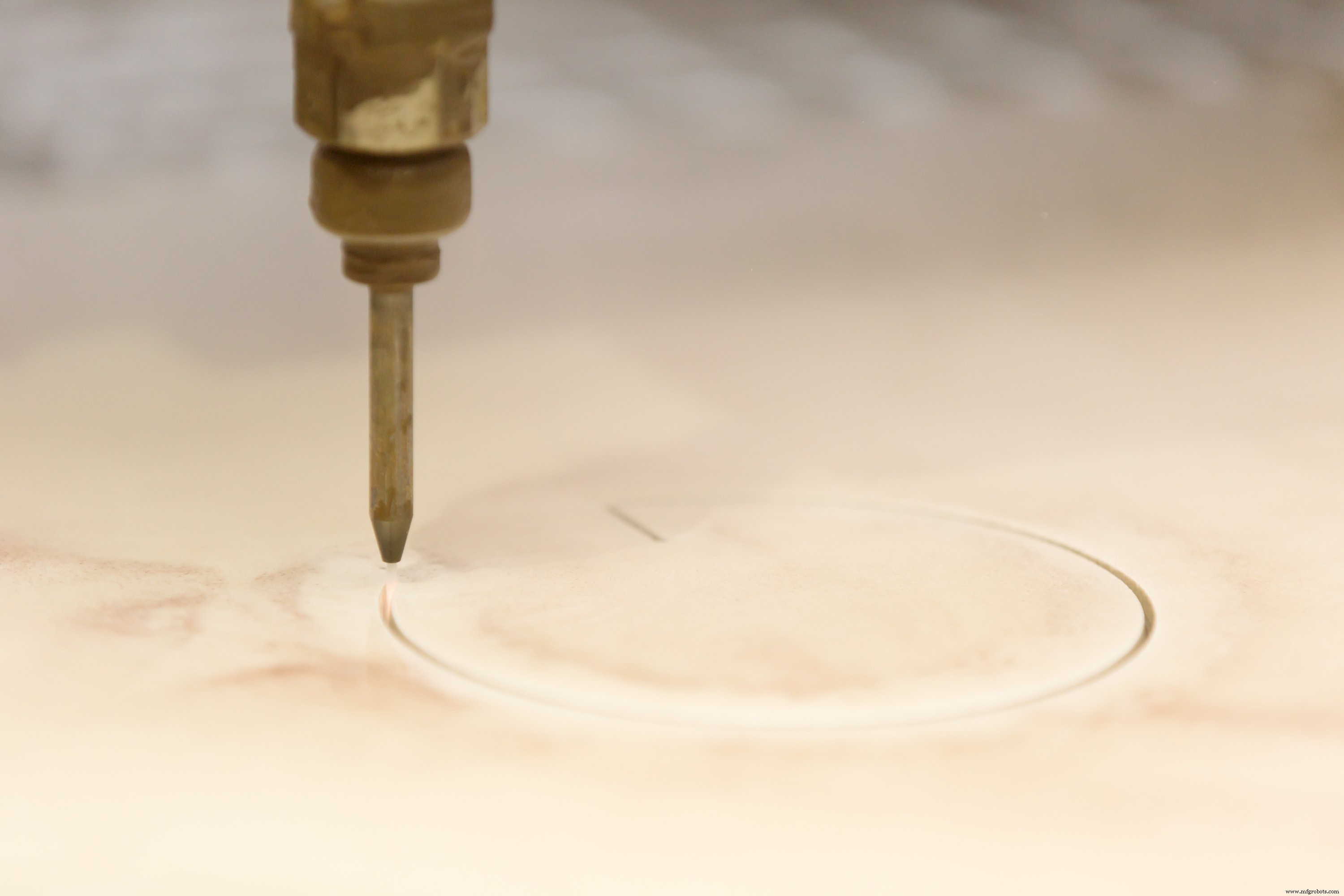
The process of waterjet cutting is essentially the same as natural water erosion, accelerated and concentrated. The cutter is connected to a high-pressure water pump and water is ejected out of the nozzle. The stream of high-speed water cuts through the material as it is blasted. Sometimes, additives such as suspended grit or other abrasives like garnet and aluminum oxide can assist in the process. The nature of the cutting stream can be very easily modified, meaning the tool can be used to cut a wide variety of materials.
Components
Although waterjet cutters vary, typically there are seven basic components:
- High Pressure Pump: generates the flow of pressurized water
- Articulated Cutting Head: optional computer-controlled add on that permits angled cuts
- Abrasive Waterjet Nozzle: combines pressurized water and granular abrasive to create cutting stream
- Catcher Tank: water-filled tank that dissipates the energy of the abrasive jet after cutting
- Abrasive Hopper: provides metered flow of granular abrasive to nozzle
- X-Y Traverse System: moves nozzle to create cutting path
- PC-Based Controller: permits production of accurate parts with minimal operator experience
Diverse Applications
Waterjets can be used for cutting, shaping, carving, and reaming. Because the nature of the cutting stream can be easily modified, it can be used to cut a wide variety of materials from wood to metal. Click here for a full list of materials that can be cut with a waterjet. Tempered glass is one of the few materials that cannot be cut with a waterjet, as any cutting mechanism will shatter it.
No Heat
One of the main benefits of cutting materials with a waterjet is that there is no heat required. Therefore, it can cut metal without interfering with its inherent structure. There is no “heat affected zone,” meaning the metal will be cut without harming the metal or changing its intrinsic properties.
4 Essential Mistakes to Avoid When Requesting a Metal Fabrication Quote
Why Precision Tolerances Matter in Custom Metal Fabrication
Industrial Technology
- How Water‑Jet Cutting Works: A Heat‑Free, Precision‑Cutting Technology
- Fiber Laser Cutting Machines: Longevity, Performance, and Maintenance Insights
- Why Fiber Laser Cutting Machines Outperform CO₂ Lasers in Precision and Efficiency
- Understanding Laser Cutting Machines: How They Work
- Understanding Turret Punching: How It Works and When to Use It
- How a 3D Pen Works: From Filament to Finished Model
- Choosing the Ideal Waterjet Cutting Machine for Your Machine Shop
- CNC Milling Machines Explained: How They Work and Their Key Types
- Unlock Precision: How a 5‑Axis Waterjet Cutting Machine Transforms Manufacturing & DIY Projects
- How French Fry Vending Machines Operate: A Behind-the-Scenes Look