



5 Key Advantages of Water Jet Cutting for Modern Manufacturing
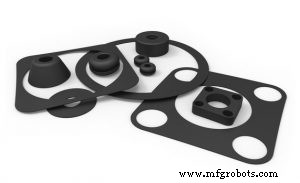
Water jet cutting has emerged as a cutting‑edge alternative to conventional machining techniques. By directing a high‑pressure stream of ultra‑pure water—sometimes mixed with abrasive particles—manufacturers can slice through a wide range of materials with pinpoint accuracy, all without the thermal distortion associated with laser or plasma methods.
#1. Cost‑Effective
Energy consumption is a major driver of operating costs. Water jet systems consume significantly less electricity than heat‑based processes such as laser or oxy‑fuel cutting. The result is a lower cost per part, making water jet an attractive option for high‑volume production and prototyping alike.
#2. Powerful
With pressures ranging from 30,000 to 90,000 psi, a water jet can effortlessly cut stainless steel, carbon steel, laminated steel, aluminum, composites, and even delicate ceramics. The sheer force of the pressurized stream produces clean, straight edges while minimizing the need for secondary finishing.
#3. Safe
Unlike thermal cutters, water jet technology generates no hazardous gases or fumes. The process relies solely on pressurized water, eliminating the need for respiratory protection or extensive ventilation systems. Operators can work in a safer, cleaner environment.
#4. Preservation
Heat‑affected zones are a common drawback of many cutting methods, potentially altering a part’s mechanical properties. Water jet cutting is a cold‑process that preserves the material’s microstructure and dimensional stability, keeping parts strong and accurate.
#5. Precision
Modern water jet machines offer tolerances as tight as 0.001 in. This level of precision is ideal for aerospace, medical device, and fine‑engineering applications where exact dimensions are critical. The ability to cut complex shapes without secondary machining further boosts productivity.
Industrial equipment
- How Water‑Jet Cutting Works: A Heat‑Free, Precision‑Cutting Technology
- Water Jet vs Laser Cutting: Which Delivers Superior Precision?
- Maximize Efficiency of Your Water Jet Cutting Machine
- Water Cutting for Stunning Architectural Metalwork
- Abrasive Water Jet Machining: Precision Cutting for Modern Manufacturing
- Water Jet Cutting: Precision Machining & Fabrication Solutions
- 5 Key Advantages of Laser Tube Cutting for Precision Fabrication
- Discover the Advantages of Waterjet Cutting: Precision, No Heat, and Versatility
- Unlocking Precision: The Key Benefits of Plasma Cutting Technology
- Choosing the Right Metal Cutting Technology: Plasma, Laser, or Water Jet