



Drawer Slides Explained: Types, Functionality, and Selection Tips
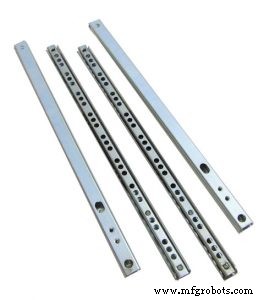
Every drawer—whether in a dresser, chest, nightstand, or workstation—relies on drawer slides to move smoothly. These hidden yet essential components allow drawers to glide in and out with minimal effort.
What Are Drawer Slides?
Drawer slides, also known as drawer runners, are precision-engineered devices that enable horizontal drawer movement. A drawer attaches to a pair of slides, which keep it aligned and prevent it from binding against the cabinet frame.
How Drawer Slides Work
By reducing friction, drawer slides ensure that drawers open and close cleanly. Installing a drawer directly into a cabinet can cause excessive wear on both the drawer and the frame. Slides replace that direct contact with a guided track system, preserving the integrity of the furniture.
Most slides feature a long, narrow metal housing with an internal track. Inside this track, small ball bearings roll smoothly along grooves, allowing the drawer to glide effortlessly. These are the most common type, known as ball‑bearing drawer slides.
Each drawer requires two slides—one for each side. Depending on the design, slides can mount to the drawer’s side or bottom. Ball‑bearing slides typically use side mounting, securing the drawer’s side to the slide’s housing.
Key Factors When Choosing Drawer Slides
- Material Quality – Choose slides made from robust metals such as carbon steel or galvanized cold‑rolled steel to avoid premature wear.
- Mounting System – Verify the slide’s fastener size and mounting method to ensure compatibility with your cabinet construction.
- Travel Direction – Decide between one‑way slides, which only allow movement in a single direction, and two‑way slides that provide full forward and reverse motion.
By considering these factors, you can select drawer slides that deliver durability, smooth operation, and long-term reliability for any furniture piece.
Industrial equipment
- Verilog Basics: Designing Your First AND Gate
- How Lifting Tables Boost Workplace Ergonomics and Reduce Injury Risk
- Continuous Hinges (Piano Hinges): Design, Function, and Applications
- Stereolithography (SLA) 3D Printing: UV‑Cured Resin Builds Fast, Strong Prototypes
- Choosing the Right Drawer Slides: A Comprehensive Guide
- Titanium Alloys 101: Strength, Grades, and Key Benefits for Engineers
- What Counterbore Screws Are and Why They’re Essential for Flush Fastenings
- Choosing the Right Drawer Slides: Center‑Mounted, Under‑Mounted & Ball‑Bearing Options
- Foundations and Advancements of AC Motor Technology
- Choosing the Right Drawer Slides for Custom Rackmount Enclosures