



How Lifting Tables Boost Workplace Ergonomics and Reduce Injury Risk
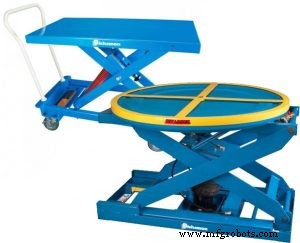
Creating an ergonomic work environment starts with the right tools. Among the most effective are lifting tables—robust devices that transform heavy lifting into a simple, controlled motion.
What Is a Lifting Table?
A lifting table is a mechanical platform that raises objects using a scissor‑lift mechanism. Workers place items on the flat bed; a single lever or motor then lifts the entire platform to the desired height.
How Lifting Tables Operate
The core of a lifting table is its X‑shaped scissor system. In the lowered position, the scissor legs are fully extended along the table’s base tracks. Activating the lift causes the legs to converge, which forces the top plate—connected to the work surface—to rise. This motion is smooth, precise, and requires minimal operator effort.
Key Benefits of Lifting Tables
- Reduces Musculoskeletal Risk: By eliminating manual lifting, lifting tables lower the incidence of back pain and other MSDs—an industry concern that affects 30% of workers worldwide (NIOSH).
- Improves Productivity: Operators can set items to any height quickly, shortening cycle times in assembly, warehousing, and maintenance tasks.
- Versatile Use: Available in various sizes and weight capacities, from lightweight 2‑ton models for office supplies to heavy‑duty 15‑ton units for industrial machinery.
- Customizable Controls: Choose from manual levers, pneumatic pistons, or electric actuators with programmable presets for repetitive tasks.
- Specialized Pallet Lifting Skids: For pallet handling, skids replace the flat platform with two long arms, providing a secure, level hold for 48‑inch pallets.
Adopting lifting tables aligns with OSHA’s ergonomic recommendations and demonstrates a commitment to worker safety and operational excellence.
Industrial equipment
- Verilog Basics: Designing Your First AND Gate
- Lifting Magnets Explained: How They Work & Why They're Essential for Industrial Safety
- Continuous Hinges (Piano Hinges): Design, Function, and Applications
- Stereolithography (SLA) 3D Printing: UV‑Cured Resin Builds Fast, Strong Prototypes
- Inorganic Antimicrobial Coatings: Science, Applications, and Benefits
- Titanium Alloys 101: Strength, Grades, and Key Benefits for Engineers
- Drawer Slides Explained: Types, Functionality, and Selection Tips
- What Counterbore Screws Are and Why They’re Essential for Flush Fastenings
- Foundations and Advancements of AC Motor Technology
- Essential Guide to Choosing the Perfect Table for Your Home