



Understanding the Four Key Components of a Gas Spring
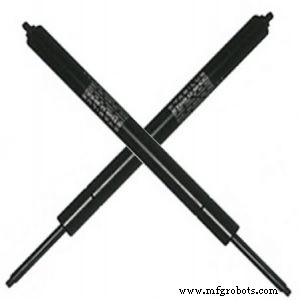
Gas springs—widely used in machinery, automotive systems, and modern furniture—store mechanical energy by compressing inert gas. While many models vary in size and pressure rating, virtually all share the same four essential parts that govern their performance.
#1) Rod
The rod is a solid, cylindrical element that is partially housed inside the spring’s chamber. Its free end is the interface with the external load, while the embedded portion anchors it within the gas chamber. When a force is applied, the rod slides into the chamber, converting potential energy into a controlled gas compression.
#2) Piston
Attached directly to the rod’s tip, the piston is a sealed, disc‑shaped component that resides entirely within the gas chamber. As the rod moves, the piston slides smoothly, separating the gas volume into two zones—pre‑load and post‑load. This separation ensures a consistent force output regardless of the rod’s position.
#3) Seals
Multiple seals—typically made from rubber or PTFE—encircle the rod, piston, and chamber walls. Their primary role is to keep the inert gas (usually nitrogen, chosen for its chemical stability) and lubricating oil inside the spring. By preventing leaks, the seals allow the gas to compress effectively, storing mechanical energy for reliable operation.
#4) End Attachments
End attachments, also known as fittings, are engineered to mate the rod with the specific application—whether a cabinet latch, hydraulic cylinder, or automotive suspension component. They come in flat, flanged, or threaded styles, enabling secure mounting and load transfer across diverse systems.
For deeper insight into gas spring selection and maintenance, read our comprehensive guide.
Industrial equipment
- Why Custom-Molded Parts Are Essential for High-Performance Machinery
- Spring Door Hinges 101: How They Work, Benefits, and Why You Should Choose Them
- The Three Core Components of a Ball Bearing
- Spring Plungers Explained: Function, Materials, and Installation
- Understanding the Key Components of a Bolt: A Comprehensive Guide
- How Gas Springs Store Energy: Mechanics, Function, and Applications
- Why Gas Cylinder Cages Are Essential for Safety and Compliance
- Discover 6 Key Advantages of CNC‑Turned Parts for Precision Manufacturing
- Key Components of a Riflescope: A Comprehensive Guide
- CNC Lathe Machine: Key Components Explained