



Understanding Hinge Mechanics: Leaves, Knuckles, and Pins
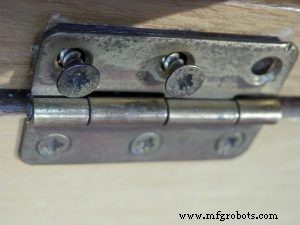
Hinges are precision mechanical bearings that allow a controlled, limited range of rotational movement between two components. Doors, gates, cabinets, and many other assemblies rely on hinges to swing open or close while maintaining a fixed angle. The functionality of a hinge is achieved through three essential parts: the leaves, the knuckle, and the pin.
Leaves
Leaves are the flat, rectangular plates that attach directly to each workpiece. Typically, a hinge has two leaves—one for each side of the joint—except in specialized designs such as flag hinges. Each leaf contains pre‑drilled holes to accommodate screws or other fasteners, securing the hinge to the underlying surface. When the leaves rotate, they transfer the motion between the two connected surfaces.
Knuckle
Often referred to as a loop or node, the knuckle is the central cylindrical tube formed when the leaves are joined together. The leaves feature interlocking ridges that fit into one another, creating a hollow tube. This knuckle acts as the core of the hinge’s joint, guiding the rotation and ensuring a smooth, predictable path.
Pin
The pin, or pintle, is a narrow, solid rod that passes through the hollow center of the knuckle. By threading the pin through the interlocking leaves, the hinge’s components are held together securely. Without the pin, the leaves would separate, and the hinge would fail to create a functional joint.
In Conclusion
Every hinge, whether used on a simple door or a complex mechanical system, is built around the same three core parts: leaves, a knuckle, and a pin. These elements work in concert to provide reliable, limited rotation, making hinges indispensable in countless applications.
Industrial equipment
- Understanding Weld Components: A Clear Guide with Diagrams
- Discover the Advantages of Waterjet Cutting for Precision Fabrication
- Types of Actuators: How to Pick the Right One for Your Industrial Machinery
- Understanding the Key Components of a Pulley System
- Essential Guide to Solenoid Wiring: Best Practices & Tips
- Inside a Car Production Line: Key Stations & Roles
- Exploring the 7 Core Types of Technology
- Exploring the Two Primary Types of Pumps
- Hydraulic Pump Classifications: Positive vs Negative Displacement Explained
- Discover the Key Benefits of Mini Dozers for Small-Scale Projects