



Hydraulic Pump Classifications: Positive vs Negative Displacement Explained
Hydraulic pumps are one of the most common types of pumps in use today. They are classified according to the way they create motion. There are two main types: positive displacement and negative displacement pumps.
Overview of hydraulic pumps
1. A hydraulic pump is a machine that uses the power of hydraulic fluid to move things or fluids.
2. There are three main classifications of hydraulic pumps: rotary, reciprocating, and pistonic.
3. Rotary pumps are the most common type of pump, and they use a rotating impeller to create the flow of fluid.
4. Reciprocating pumps are similar to rotary pumps, but they use two pistons instead of a rotating impeller.
5. Pistonic pumps use a rotating vane to create the flow of fluid.
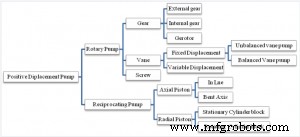
What are the 2 classifications of hydraulic pumps
What is a basic hydraulic pump classification?
A hydraulic pump is a machine that uses pressurized fluid to perform a task. There are two main types of hydraulic pumps: rotary and piston. Rotary pumps are the most common type, and they use a rotating disc or wheel to move the fluid. Piston pumps use pistons to move the fluid.
Basic hydraulic pump classification is based on the type of pump used and the way the fluids are moved. Rotary pumps are classified as either direct-drive or geared-drive. Direct-drive rotary pumps use no gears, and they rotate around an axis directly connected to the output shaft. Geared-drive rotary pumps use gears to rotate the output shaft, which allows them to produce more power.
Piston pumps are classified as either single-stage or multi-stage. Single-stage piston pumps use one piston to move all of the fluid, while multi-stage piston pumps use multiple pistons to move the fluid.
Overall, hydraulic pumps are important machines that help us perform tasks in a variety of ways. They can be classified based on their type of pump, how the fluids are moved, and how powerful they are.
What are the pros and cons of hydraulic pumps?
Hydraulic pumps are a type of engine that use hydraulic fluid to power the movement of pistons. These engines are used in a variety of applications, including transportation, mining, and manufacturing.
There are several types of hydraulic pumps. Some are classified as direct drive pumps, while others are geared drive pumps. Direct drive pumps use no gears, while geared drive pumps use gears to transfer power from the engine to the pump.
The main advantage of direct drive pumps is that they are simpler and more rugged than geared drive pumps. They also have a greater ability to handle high pressures and temperatures. However, geared drive pumps offer some advantages over direct drive pumps. For example, they are better at handling fluctuating speeds and they can be more efficient in low-speed applications.
Overall, hydraulic pumps are a versatile engine type that have a number of advantages and disadvantages. Depending on the application, one may be preferable over the other.
What are the 2 classifications of a hydraulic pump?
There are 2 different types of hydraulic pumps: positive displacement and rotary.
Positive displacement pumps use a piston to move the fluid. The piston is attached to a cylinder and the cylinder is connected to the input shaft of the pump. The output shaft of the pump is connected to the output pipe.
Rotary pumps use a rotor to move the fluid. The rotor has a number of disks that turn. The disks are attached to the input shaft of the pump. The output shaft of the pump is connected to the output pipe.
What are the differences between each classification?
There are different types of hydraulic pumps, each with its own advantages and disadvantages. Here are the four classification of hydraulic pumps:
1) Pumping Systems
2) Industrial Hydraulic Pumps
3) Service Hydraulic Pumps
4) Marine Hydraulic Pumps.
Pumping Systems pumps liquids or gases under pressure. They are used in factories, oil refineries, and water treatment plants. They are also used in supermarkets to move food products from the shelves to the cooking area. Industrial hydraulic pumps can produce up to 600 psi (4,500 kPa). Service hydraulic pumps are used in everyday applications, such as moving people and objects. They produce up to 50 psi (3,500 kPa), which is enough to move most objects. Marine hydraulic pumps are used on ships and submarines. They produce high pressures (up to 10,000 psi/70,000 kPa). These high pressures are needed to operate valves and other equipment on ships and submarines.
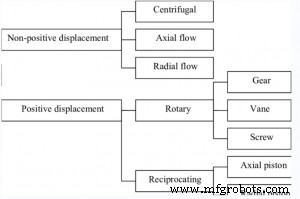
What are the 2 classifications of hydraulic pumps
How are these types of pumps used?
Hydraulic pumps are used in a variety of different applications. They can be used to move fluids and gases, and they are also used in industrial processes. There are three main types of hydraulic pumps: rotary, piston, and cylinder.
Rotary pumps are the most common type of pump. They use a rotor to move the fluid. The rotor is connected to a shaft that moves the pump body. This type of pump is typically used to move fluids and gases.
Piston pumps are similar to rotary pumps, but they use pistons instead of a rotor. The pistons push the fluid along the shaft. This type of pump is used to move liquids and gases in industrial processes.
Cylinder pumps are the smallest type of pump. They use a cylinder to move the fluid. The cylinder has a piston inside it that moves up and down the cylinder. This type of pump is used to move liquids and gases in industrial processes.
What are the Applications of Hydraulic Pumps?
Hydraulic pumps are used in a variety of applications, including agriculture, mining, construction, oil and gas production and transport.
There are three main classifications of hydraulic pumps: positive displacement, rotary and vane pumps.
Positive displacement pumps rely on the force of a fluid to move the pistons. The fluid is forced into and out of the pump through a piston rod. This type of pump is used in agriculture, mining and construction.
Rotary pumps use a gearbox to convert the rotational motion of the engine into a linear motion that can be used to move the pistons. This type of pump is used in oil and gas production and transport.
Vane pumps use vanes to convert the flow of fluid into mechanical energy. This type of pump is used in water treatment and desalination.
Conclusion
There are two main types of hydraulic pumps: positive displacement and rotary. Positive displacement pumps have a piston that moves up and down, while rotary pumps use a rotor to move the fluid.
What are the 2 classifications of hydraulic pumps, please clickhttps://topkitparts.com/ to learn more
Industrial equipment
- Hydraulic Seals Explained: Types, Materials, and Their Role in Industrial Cylinders
- Hydraulic Systems Explained: Fundamentals and Real-World Applications
- Understanding Hydraulic Control Systems: Principles, Functions, and Applications
- Domestic Water Pumps: Types and How They Work
- Exploring the Two Primary Types of Pumps
- Exploring the Key Types of Hydraulic Pumps for Industrial Efficiency
- The Two Main Types of Hydraulic Pumps Explained
- Identifying the Most Powerful Hydraulic Pump for Industrial Applications
- Understanding the Cost of Hydraulic Pumps: Key Factors & Price Breakdown
- Explore the 4 Key Types of Hydraulic Motors and Their Applications