



Understanding the Key Components of a Pulley System
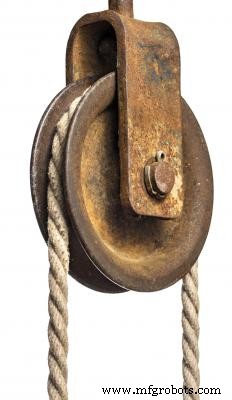
Categorized as a simple machine, a pulley is used to reduce the amount of force needed to lift a load. It basically consists of a grooved wheel mounted on an axle or shaft and a rope or belt that runs within the groove. The three different pulley parts are a wheel, an axle, and a rope. The advantage of using a pulley is that it both changes the direction and point of application of force, making it much easier to lift weights.
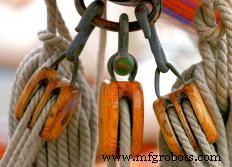
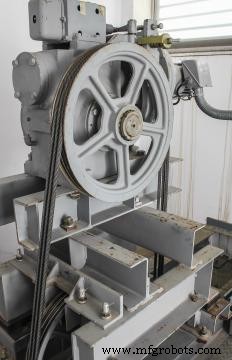
The grooves on the pulley wheels prevent the rope or belt from slipping off. Most often, the rope is stretched tight and kept in a state of tension because a loose belt would otherwise slip, causing the pulley system to fail. Pulley wheels rotate on a central shaft and are typically attached to it with what is known as a "key." The key is mostly tapped into position in such a way that it holds both the pulley wheel and the shaft together. They are fitted tightly in order to prevent the pulley wheel from slipping off the shaft.
Pulleys vary in how the different pulley parts are organized. The fixed pulley is one where the grooved wheel has a fixed axle, and the whole machine is attached to a surface. This type of pulley provides no real mechanical advantage as it still requires a person to apply the same amount of force; it only changes the direction of the force applied. A movable pulley, on the other hand, has a free axle, allowing the axle to move and significantly reduce the amount of overall force needed. As one end of the rope is fixed in place, a force exerted on the other end of the rope applies a double force to the object being lifted.
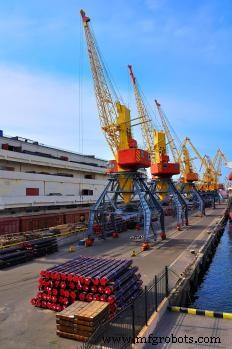
Compound pulleys feature a mixture of both movable and fixed pulley systems and reduce the amount of force required to less than half of the weight of the object being lifted. The block and tackle pulley is a type of compound pulley where a number of pulleys are mounted on each axle. This type of pulley makes optimum use of the different pulley parts and is used for lifting extremely heavy loads, such as shifting cargo from ships to land. No one really knows when and how pulleys were first developed or who designed the different pulley parts. Archimedes is credited with building the first block and tackle pulley system, which he used along with other compound pulleys to move an entire battleship filled with people.
The block and tackle pulley is also used in cranes and to raise the sails on ships. Pulleys have numerous applications and are vital for most machine operations in one way or another. Various types of pulleys make the best use of the different pulley parts to do a number of tasks in many industries. They are used in the aerospace, automobile, and other industries. For instance, pulleys are critical for many climbing and rescue operations.
What Are Pulleys?
The pulley, a simple machine, is made of rope wrapped around a grooved wheel to help make difficult tasks more manageable. The wheel is fixed on an axle or shaft. A flexible cord, chain, belt, or cable are other drive elements used instead of rope. The pulley’s primary function is to lift heavy items, but it also assists with transporting and providing power from one entity to another. They work to distribute weight, which reduces the amount of force needed. The pulley allows for the changing of direction and helps support movement. Pulleys transmit energy and motion. Their simple nature makes them so widely used.
You are around pulleys more than you probably think. Here are some everyday examples:
- Elevators
- Hoisting a bucket of water up and down a well
- Rock climbers use pulleys to assist in their adventures
- Opening and closing theatre curtains
- Window blinds with cords
- Exercise machines
- Flagpoles
- Ceiling fan chains
- Construction equipment
It is safe to say that pulleys are one of the most sophisticated and essential machines, as they have been around since 287 BC - 212 BC and are still so frequently used today.
How Pulleys Work
Pulleys function in several ways for different operations. To better understand how pulleys work, you need to know the three main types: the movable pulley, the fixed pulley, and the compound pulley.
The fixed pulley is attached to a supporting structure. The weighted item lifts once the rope on the other side is pulled down. The fixed pulley helps you reverse the direction of your lifting force, and gravity is in favor. An example of a fixed pulley from the above list is hoisting up a bucket of water from a well.
The movable pulley is different from the fixed one as the pulley is directly attached to the load. Therefore, only one part of the rope is attached to a fixed object. An example of this is a zipline.
The compound pulley uses a combination of fixed and movable pulleys. It is a system of two or more pulleys with a rope between them. The more pulleys there are, the greater the mechanical advantage overall. These are common on cranes for lifting and transporting heavy materials.
How To Make a Pulley
You can easily make a pulley system with commonly used household items. A wire clothes hanger, wire cutters, empty thread spool, pliers, string, and a lightweight object are needed. Follow the below steps to make a fixed pulley:
- Cut the middle of the bottom of the hanger with wire cutters.
- Carefully pry open the cut you made and slide an empty thread spool on one end.
- Slide both sides of the cut wire through the center of the spool pulling each end out. You want to keep the spool in place, so use pliers to bend the ends of the wires around the spool.
- Cut a piece of string (length should double the distance from the floor to the hanger) and loop it over the spool.
- Find a lightweight object to use as the load, for example, some washers.
- Tie one end of the string around your object and ensure it does not fall out when lifted. Set the weight on the floor while the loose line on the other side hangs free.
You now have a fixed pulley system ready for experiments with these steps. To start, pull down on the loose end of the string to lift the weight. The spool will rotate around the hanger, which reduces the amount of friction and therefore makes it easier to lift the object.
Industrial equipment
- Understanding Hinge Mechanics: Leaves, Knuckles, and Pins
- The Ultimate Guide to Nail Types: Understanding Every Variety
- The Four Core Types of Steel Explained
- Types of Sandblasting Media: Choosing the Right Material for Your Project
- Understanding the Various Roles of Factory Workers
- Expert Guide to the Most Effective Land Clearing Methods
- A Comprehensive Guide to Propane Fittings: Types, Uses, and Safety
- Cereal Crops Explained: Rice, Wheat, and Corn – The Backbone of Global Food Supply
- Inside a Car Production Line: Key Stations & Roles
- Exploring the Essential Hand Tools Every Carpenter and DIY Enthusiast Should Know