



What Is a Toggle Press? How It Works and Why It Matters
In the manufacturing world, machine presses are essential tools for shaping and forming materials. While some industrial presses can exert pressures up to 30 tons, many production tasks require a more compact, cost‑effective solution. The toggle press fulfills that niche by delivering powerful, manual compression through a simple lever system.
What Is a Toggle Press?
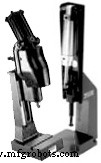
A toggle press is a hand‑operated machine that uses a pair of levers to apply force to a workpiece. The operator pulls a large hand lever; this action causes a smaller, secondary lever to engage the press’s ram or piston, delivering the final compression.
Typically, toggle presses are bench‑mounted. Installation involves securing the unit to a sturdy workbench with bolts, ensuring it remains stationary during operation.
How Toggle Presses Work
The core of a toggle press’s power lies in its toggle‑like lever mechanism. When the hand lever is pulled, the secondary lever shortens, driving the ram into the material. Releasing the hand lever allows the secondary lever to return to its original length, ready for the next cycle.
Because the secondary lever multiplies the operator’s effort, the force delivered to the workpiece is significantly greater than the manual input alone. This mechanical advantage makes toggle presses ideal for tasks such as metal bending, stamping, and small‑scale fabrication.
Why Choose a Toggle Press?
Toggle presses combine simplicity with effectiveness. They are affordable, easy to set up, and require no electricity, making them perfect for workshops, small manufacturers, and repair shops. Their manual operation also allows for precise control over the applied pressure, which is crucial for delicate work.
In Conclusion
If you need a reliable, low‑cost press that delivers substantial force without the complexity of hydraulic or electric systems, a toggle press is an excellent choice. Its lever‑based design provides a clear, repeatable pressing action that’s trusted in many production environments.
Industrial equipment
- Compression Molding: Process, Benefits, and Applications for Rubber Parts
- How Rack and Pinion Presses Operate: A Practical Guide
- Demagnetizers Explained: How They Add or Remove Magnetism from Tools
- Abrasive Jet Machining: How It Works, Benefits, and Practical Applications
- Understanding Gate Hinges: Types, Functions, and How to Choose the Right One
- Transfer Molding Explained: Process, Benefits, and Variants
- What Is a Solar Inverter? How It Converts Solar Power into Usable Electricity
- Engine Braking Explained: How It Works and Why It Matters
- Understanding Vehicle Transmissions: Types, Functions, and How They Operate
- Understanding Industrial Clutches: Definition, Function, and Applications