



5 Key Factors for Selecting the Right Plastic Hinges
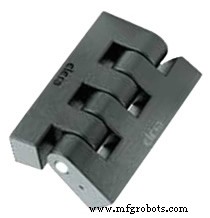
Plastic hinges offer a lightweight, cost‑effective alternative to metal. Their performance depends on several critical design choices. Below, we outline five essential considerations that will help you select a hinge that meets your application’s demands.
#1) Living or Non‑Living
Hinges are classified as living or non‑living based on their construction. Living hinges are a single, flexible piece of plastic that bends without a pin or knuckles, making them ideal for lightweight, high‑cycle applications such as clamshell packaging. Non‑living hinges include knuckles and require a pin; they are better suited for heavier loads where a more robust joint is required.
#2) Torque Resistance
Torque resistance indicates the maximum torque a hinge can endure before deformation or failure. For doors, lids, or structural assemblies, choose a hinge rated for the anticipated load. Manufacturers often provide torque curves; consult these specifications to ensure long‑term durability.
#3) Size
Plastic hinges come in a spectrum of dimensions. Key measurements include center‑to‑center spacing, flange height, and overall length. Match these dimensions to the thickness of the panels and the required clearance to avoid interference during operation.
#4) Fastener Holes
Fastener holes are critical for secure mounting. Check the number, size, and placement of holes. Some hinges feature a single central hole, while others provide multiple holes for distributed load. Accurate hole placement simplifies assembly and improves joint stability.
#5) Angle of Rotation
Every hinge has a defined rotation range. Typical plastic hinges offer 0–70°, 0–90°, or 0–180° angles. Verify that the chosen angle aligns with your functional requirements—whether it’s a narrow swivel or a full‑open latch.
Industrial equipment
- Choosing the Right Pull Handles: 5 Key Factors to Consider
- Choosing Marine Hinges: 5 Essential Factors for Durable Performance
- 5 Key Factors for Selecting the Right O‑Ring Seal
- 5 Key Factors to Evaluate When Selecting a Lifting Magnet
- 5 Key Factors to Evaluate Before Buying Wing Knobs
- 5 Key Factors to Evaluate When Selecting a Refrigeration Lock
- Choosing the Right Piano Hinges: 5 Essential Considerations
- 5 Key Factors to Choose the Right Padlock for Your Business
- 5 Key Factors for Selecting the Right Dowel Pins
- Choosing Industrial Shears: 5 Key Factors for Safe, Efficient Sheet Metal Cutting