



5 Key Factors for Selecting the Right O‑Ring Seal
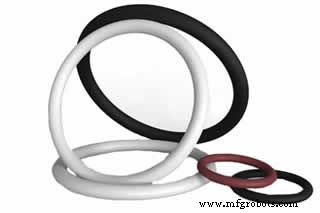
Choosing the right O‑ring is critical for any sealing application. These toric joints—so named for their distinctive circular shape—are engineered to create a reliable barrier around fluid or gas pathways. While all O‑rings share a similar geometry, their performance varies widely based on design parameters. Below, we break down the five most important factors to consider when selecting an O‑ring for your system.
#1) PSI Rating
The pounds‑per‑square‑inch (PSI) rating indicates the maximum pressure an O‑ring can withstand before it begins to leak. Industrial applications often involve pressurized gases, hydraulic fluids, or high‑temperature liquids, making the PSI rating a non‑negotiable requirement. Always choose an O‑ring with a PSI rating that exceeds the maximum operating pressure of your system by at least 20–30% to ensure a safety margin.
#2) Internal Diameter (ID)
The internal diameter is the distance between the two widest points of the ring and determines the fit on the mating surface. To avoid leakage or mechanical failure, the ID must match the bore or groove of the component within a tolerance of ±0.002 inches (±0.05 mm) for most high‑precision applications. An ID that is too large will leave a gap, while an ID that is too small can compress the ring excessively, leading to wear or extrusion.
#3) Cross‑Sectional Size
Cross‑section refers to the thickness of the ring’s cross‑sectional profile. A larger cross‑section generally provides a higher load‑bearing capacity and improved sealing performance, but it also requires a correspondingly larger groove or bore. Common cross‑section sizes include 0.125, 0.1875, and 0.25 inches (3.2, 4.8, and 6.4 mm). Match the cross‑section to the groove depth to maintain optimal compression—typically 20–30% of the cross‑sectional diameter.
#4) Material
O‑rings are manufactured from a variety of materials, each with distinct chemical and temperature resistances:
- Natural and synthetic rubbers (e.g., NBR, EPDM, Viton) for general‑purpose sealing.
- Polyethylene and PTFE for high‑temperature or chemical‑resistant environments.
- Elastomeric composites for extreme pressure applications.
Select the material that aligns with your fluid compatibility, temperature range, and mechanical load requirements.
#5) Hardness (Shore A)
Hardness, measured on the Shore A durometer scale, reflects the ring’s resistance to compression. A rating of 40 Shore A indicates a soft, flexible ring suitable for low‑pressure, high‑flow applications, whereas 90 Shore A denotes a hard, durable ring ideal for high‑pressure or abrasive environments. Match the hardness to the expected operating conditions to balance flexibility and longevity.
By carefully evaluating these five parameters—PSI rating, internal diameter, cross‑section, material, and hardness—you can select an O‑ring that delivers reliable, long‑lasting seals in any industrial setting.
Industrial equipment
- 5 Key Factors for Selecting the Right Plastic Hinges
- Choosing the Right Pull Handles: 5 Key Factors to Consider
- Choosing Marine Hinges: 5 Essential Factors for Durable Performance
- 5 Key Factors to Evaluate When Selecting a Lifting Magnet
- 5 Key Factors to Evaluate Before Buying Wing Knobs
- 5 Key Factors to Evaluate When Selecting a Refrigeration Lock
- Choosing the Right Piano Hinges: 5 Essential Considerations
- 5 Key Factors to Choose the Right Padlock for Your Business
- 5 Key Factors for Selecting the Right Dowel Pins
- Choosing Industrial Shears: 5 Key Factors for Safe, Efficient Sheet Metal Cutting