



Demagnetizers Explained: How They Add or Remove Magnetism from Tools
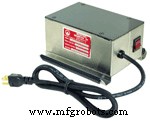
In modern manufacturing, magnets play a critical role—from heavy‑lift material handling to precision tooling. For instance, magnetic screwdrivers keep fasteners firmly in place, and magnetic clamps secure workpieces during machining. With so many applications, understanding how to control magnetism on tools can boost productivity and safety. A demagnetizer provides that control, allowing you to add or remove a magnetic field as needed.
Overview of Demagnetizers
A demagnetizer, also called a degausser, is a device that can either impart or neutralize a magnetic field on a tool. By temporarily magnetizing an otherwise non‑magnetic screwdriver, it can attract and hold screws during assembly. Conversely, running a tool through the same device will erase its magnetism, restoring it to a neutral state. This flexibility makes demagnetizers indispensable in workshops, repair shops, and production lines.
How Demagnetizers Work
Demagnetizers generate a high‑frequency alternating magnetic field that realigns the magnetic domains in ferromagnetic materials. When the field is applied, the domains orient parallel to the field, temporarily turning the tool magnetic. When the field is removed or reversed, the domains become randomized, and the tool loses its magnetism. For de‑magnetization, the device typically produces a fluctuating field that disrupts domain alignment, effectively erasing residual magnetism.
In Conclusion
Demagnetizers give you precise control over a tool’s magnetic state—adding a temporary magnet for better grip or eliminating unwanted magnetism. Whether you need a compact, portable unit or a larger, industrial system, the core principle remains the same: manipulating electron alignment to achieve the desired magnetic effect.
Industrial equipment
- What Is a Toggle Press? How It Works and Why It Matters
- Compression Molding: Process, Benefits, and Applications for Rubber Parts
- Abrasive Jet Machining: How It Works, Benefits, and Practical Applications
- Understanding Gate Hinges: Types, Functions, and How to Choose the Right One
- Transfer Molding Explained: Process, Benefits, and Variants
- What Is a Solar Inverter? How It Converts Solar Power into Usable Electricity
- Engine Braking Explained: How It Works and Why It Matters
- Understanding Vehicle Transmissions: Types, Functions, and How They Operate
- Understanding Industrial Clutches: Definition, Function, and Applications
- Understanding Welding: Processes, Techniques, and Industrial Applications