



Engine Braking Explained: How It Works and Why It Matters
Engine braking is the technique of slowing a vehicle by releasing the accelerator and downshifting, rather than applying the foot brakes.
The braking system is responsible for decelerating the vehicle whenever the driver steps on the pedal, which over time leads to wear.
Engine braking offers a less wear‑intensive alternative, improving component longevity and overall efficiency.
Read on to understand the mechanics behind this valuable technique.
How Does Engine Braking Work?
When the accelerator pedal is released, the air intake valve closes, creating a vacuum that restricts airflow to the cylinders. This drop in energy produces a braking force that slows the engine’s RPMs.
The resulting resistance is transmitted through the drivetrain to the wheels. While some braking comes from drivetrain friction, most originates from the vacuum created by the closed intake.
Thus, the vehicle decelerates without the need for the foot brake.
How to Engine Brake
Mastering engine braking requires practice and attention to safety. Start on flat, uncluttered, dry roads to gain confidence.
The technique varies by transmission type, with manual vehicles offering the most control.
To achieve a smooth slowdown, release the accelerator, downshift one gear, and gradually let out the clutch. Allow the vehicle to settle at a safe speed before repeating the process.
This method reduces reliance on the service brakes, minimizing wear and ensuring a safe stop when you finally apply the brakes.
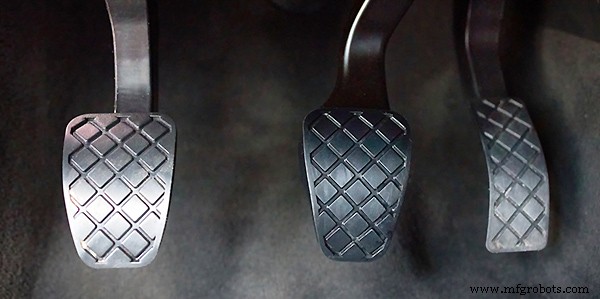
Automatic transmissions can also be used for engine braking, typically by selecting a lower gear range. This is especially useful before descending steep grades.
Modern automatics often provide manual shift levers or paddle shifters, enabling the driver to downshift and harness engine braking without disengaging the clutch.
Jake Brakes
Engine braking, or compression braking, is also employed in large commercial vehicles, where a specialized system known as a Jake brake (or Jacobs brake) assists in deceleration.
In long‑haul semitrailers, most braking occurs under 20 psi air pressure, meaning less than 20% of the system’s capacity is routinely used.
Jake brakes supplement the service brakes, reducing their workload and extending the life of the primary braking components.
The system activates when the driver presses a button, cutting fuel to selected cylinders and opening exhaust valves to release compressed air, creating mechanical drag.
Given the heavy loads carried by semis, the added braking force helps prevent brake fade and protects the vehicle’s braking system.
Benefits of Engine Braking
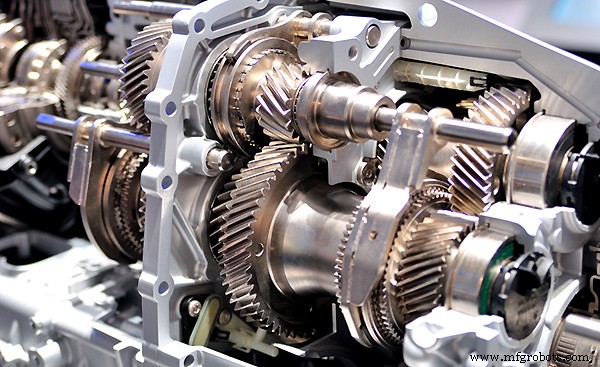
You might wonder whether engine braking harms the engine. When performed correctly, the heat generated is negligible, and the transmission remains undamaged.
Key advantages include:
- Lower maintenance costs: Fewer foot‑brake applications mean less wear on brake components, extending their lifespan.
- Safer downhill driving: Reduces the risk of brake fade and failure by keeping brake temperatures in check.
- Improved fuel efficiency: By cutting fuel to cylinders during compression braking, the engine uses slightly less fuel.
Learn About Braking Systems at UTI
If engine braking sparks curiosity about vehicle braking systems, consider enrolling in the Automotive Technology program at Universal Technical Institute (UTI).
UTI’s curriculum covers a broad spectrum of vehicle systems, including braking, and you can graduate in less than a year7 with the hands‑on experience and training needed for an entry‑level career in the industry.1
For more information, request details online or call 800‑834‑7308 to speak with an admissions representative.
Industrial equipment
- What Is a Toggle Press? How It Works and Why It Matters
- Compression Molding: Process, Benefits, and Applications for Rubber Parts
- Demagnetizers Explained: How They Add or Remove Magnetism from Tools
- Abrasive Jet Machining: How It Works, Benefits, and Practical Applications
- Understanding Gate Hinges: Types, Functions, and How to Choose the Right One
- Transfer Molding Explained: Process, Benefits, and Variants
- What Is a Solar Inverter? How It Converts Solar Power into Usable Electricity
- Understanding Vehicle Transmissions: Types, Functions, and How They Operate
- Understanding Industrial Clutches: Definition, Function, and Applications
- Understanding Wet Brakes: Function, Benefits, and Safety Impact