



Understanding Gate Hinges: Types, Functions, and How to Choose the Right One
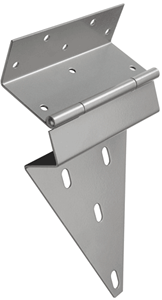
Gate hinges are essential for any gate that needs to swing smoothly and reliably. Unlike standard door hinges, they’re engineered to handle the heavier load and the harsher outdoor environment that gates typically face.
What Is a Gate Hinge?
A gate hinge is a specialized mechanical bearing designed to provide a secure, limited‑angle pivot for a gate. The hinge’s architecture allows the gate to open and close with minimal friction while withstanding repeated use and exposure to weather.
Design Differences From Traditional Hinges
While both types of hinges share the basic components—leafs, a knuckle, and a pin—gate hinges usually feature a more robust construction. They are often shorter and thicker, and many models incorporate additional leafs or a reinforced knuckle to support larger, heavier gates. This design gives them the strength and durability needed for outdoor use.
How Does a Gate Hinge Work?
The hinge functions by creating a mechanical bearing between the gate and its mounting surface (post or wall). Installation is straightforward: the leafs are affixed to the gate and the mounting point using pre‑drilled holes and bolts or screws. Once secured, the hinge allows the gate to swing freely, distributing the load evenly across the joints.
Choosing the Right Gate Hinge
When selecting a hinge, material and mounting style are critical factors. Stainless‑steel hinges are a top choice because they resist rust and corrosion, making them ideal for outdoor applications. For very heavy gates, a surface‑mounted strap hinge offers enhanced durability by spreading the load over a wider area and providing a tighter connection. Always match the hinge size and weight rating to your specific gate dimensions.
Industrial equipment
- What Is a Toggle Press? How It Works and Why It Matters
- Compression Molding: Process, Benefits, and Applications for Rubber Parts
- Demagnetizers Explained: How They Add or Remove Magnetism from Tools
- Abrasive Jet Machining: How It Works, Benefits, and Practical Applications
- Transfer Molding Explained: Process, Benefits, and Variants
- What Is a Solar Inverter? How It Converts Solar Power into Usable Electricity
- Engine Braking Explained: How It Works and Why It Matters
- Understanding Vehicle Transmissions: Types, Functions, and How They Operate
- Understanding Industrial Clutches: Definition, Function, and Applications
- Understanding Welding: Processes, Techniques, and Industrial Applications