



What Counterbore Screws Are and Why They’re Essential for Flush Fastenings
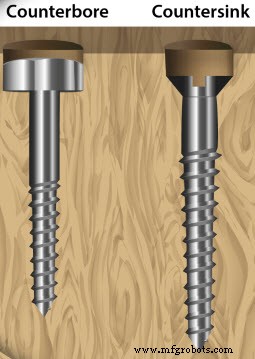
Encountered a counterbore screw and wondered what sets it apart from other fasteners? While all threaded screws taper toward the tip, counterbore screws are specifically engineered for counterbored holes, delivering a flush finish that enhances both aesthetics and structural integrity.
What Is a Counterbore Screw?
A counterbore screw is a threaded fastener designed to fit a counterbored hole—a two‑section opening comprising a deep, narrow threaded channel followed by a shallow, wider chamber that houses the screw’s head. This geometry ensures a level, even surface when the screw is fully driven.
The hallmark of a counterbore screw is its flat head, which is level on both the top and bottom. This flat design allows the screw to sit perfectly flush with the material surface, a feature prized in cabinetry, metal panels, and automotive trim.
How Counterbore Screws Work
Because of their flat heads, counterbore screws seat level with the workpiece—an essential requirement in many precision applications. A non‑flush fastener can mar the surface or compromise joint strength. Counterbore screws resolve this by aligning their head with the counterbored cavity, stopping precisely when the head reaches the surface. This ensures a smooth, undisturbed finish and prevents damage to both the fastener and the surrounding material.
Counterbore vs. Countersink Screws
In contrast, countersink screws are intended for countersunk openings. A countersunk hole has a threaded shaft that terminates in a conical recess, tapering toward the bottom. The screw’s conical head mates perfectly with this shape, guaranteeing a flush finish.
Both types share common drive recesses—Phillips, Pozidriv, slotted, etc.—but the key difference lies in the head geometry. Counterbore screws feature a uniform, flat head, whereas countersink screws have a tapered, conical head that narrows toward the tip. Choosing the correct fastener ensures optimal performance and a professional look.
Industrial equipment
- Verilog Basics: Designing Your First AND Gate
- How Lifting Tables Boost Workplace Ergonomics and Reduce Injury Risk
- Structural Screws: The Heavy‑Duty Fasteners Every Builder Trusts
- Continuous Hinges (Piano Hinges): Design, Function, and Applications
- Stereolithography (SLA) 3D Printing: UV‑Cured Resin Builds Fast, Strong Prototypes
- Titanium Alloys 101: Strength, Grades, and Key Benefits for Engineers
- What Are Eye Screws? A Professional Guide to Their Design and Uses
- Drawer Slides Explained: Types, Functionality, and Selection Tips
- Foundations and Advancements of AC Motor Technology
- Screws: History, Materials, Design, Manufacturing, and Quality Standards