



What Are Eye Screws? A Professional Guide to Their Design and Uses
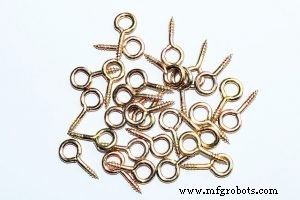
In the world of fasteners, screws are ubiquitous—everywhere from furniture assembly to structural construction. Unlike bolts, screws feature a pointed tip and external threading that bites into material, creating a secure bond. Among the myriad screw types, the eye screw stands out for its distinctive looped head, specifically engineered for hanging applications.
What Is an Eye Screw?
Also known as a screw eye, an eye screw is a fastener whose defining feature is a looped hoop at the top of a threaded shaft. Unlike flat‑head or Phillips‑head screws that are driven with a screwdriver, eye screws are installed by twisting them into a pre‑drilled hole, often using a wrench or T‑handle. The looped head cannot be turned with a standard screwdriver, which makes the installation slightly more involved but offers a robust attachment point for cords, hooks, and decorative items.
Eye screws are commonly used to hang picture frames, mirrors, shelving, and small tools in both residential and commercial settings. Their looped head can accommodate a variety of accessories—clips, cords, or hooks—making them versatile for lightweight to moderately heavy loads.
How Eye Screws Work
The functionality of an eye screw hinges on its looped head and threaded shaft. Once the screw is driven into a wall or other substrate, the loop provides a secure anchor for attaching cables or hooks. Because the head is not a traditional screw head, installation requires a pilot hole drilled to the screw’s diameter. After the pilot hole is made, the eye screw is turned into place with a wrench or T‑handle, allowing the threads to bite into the material and create a tight grip.
Industry standards—such as ANSI B1.1 and ISO 898—specify load capacities that vary by size and material. For example, a 3/16‑inch steel eye screw can typically support between 50 lb and 200 lb, depending on the substrate and mounting method. Lighter variants are suitable for picture frames, while larger, heavier‑grade screws are employed in structural or industrial applications.
In Conclusion
Eye screws are a specialized fastener defined by their looped head, engineered for hanging lightweight to moderate‑weight items. Available in a range of sizes, thread lengths, and materials—including steel, aluminum, copper, and titanium—these screws meet rigorous industry standards and provide reliable performance for both home décor and professional installations.
Industrial equipment
- Plate Clamps: Design, Function, and Benefits for Heavy‑Duty Lifting
- Lifting Magnets Explained: How They Work & Why They're Essential for Industrial Safety
- Thrust Bearings Explained: Types, Functionality, and Selection Guide
- Cup Magnets: Design, Function, and Selection Guide
- Flat Springs Explained: Design, Function, and Selection Guide
- Adjustable Glides: What They Are, How They Work, and Their Benefits
- Cam Locks Explained: How They Secure Cabinets Discreetly
- Three Essential Stages of 3D Printing Explained
- Understanding Grommets: Types, Uses, and How They Protect Your Gear
- Gaskets Explained: How They Seal Machinery and Keep Fluids in Check