



Cam Locks Explained: How They Secure Cabinets Discreetly
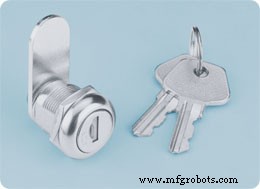
Securing cabinets, lockers, and other enclosures can be achieved with padlocks or cam locks. Cam locks are often preferred for their concealed design, allowing installation inside the enclosure without any protrusion. But what exactly are cam locks, and how do they function?
What Are Cam Locks?
Cam locks are L‑shaped locking mechanisms that secure cabinets, lockers, and similar enclosures. The core components are a cylindrical keyed nut and a tongue bar, also known as a cam. When the key is inserted and turned, the cam engages the enclosure’s latch, locking it in place.
How Cam Locks Work
Although there are various cam lock models, all operate on the same principle. The lock is mounted flush to the front of the enclosure, keeping it discreet. Rotating the key moves the cam from a vertical (unlocked) to a horizontal (locked) position, or vice versa. In the horizontal position, the cam’s tongue bar wedges into the enclosure, preventing opening; in the vertical position, the cam is disengaged, allowing free access.
Choosing Cam Locks: What You Should Know
When selecting cam locks, material matters. Many locks are made from zinc alloy—an alloy that typically contains zinc and at least one other metal, such as brass. Brass, a common zinc alloy, offers durability and resistance to corrosion, making it a popular choice in commercial security hardware.
For larger installations, consider keyed‑alike locks. Keyed‑alike means a single key operates all units, simplifying key management and reducing the risk of lost keys.
Some cam locks are keyless, featuring a thumb‑turn mechanism. While convenient, these locks lack the theft‑deterrent quality of keyed models and are best suited for low‑risk environments.
Industry experts note that cam locks provide reliable, tamper‑resistant security when installed correctly, making them a staple in office, school, and retail settings.
Industrial equipment
- Plate Clamps: Design, Function, and Benefits for Heavy‑Duty Lifting
- Lifting Magnets Explained: How They Work & Why They're Essential for Industrial Safety
- Thrust Bearings Explained: Types, Functionality, and Selection Guide
- Cup Magnets: Design, Function, and Selection Guide
- Flat Springs Explained: Design, Function, and Selection Guide
- Adjustable Glides: What They Are, How They Work, and Their Benefits
- What Are Eye Screws? A Professional Guide to Their Design and Uses
- Three Essential Stages of 3D Printing Explained
- Understanding Grommets: Types, Uses, and How They Protect Your Gear
- Gaskets Explained: How They Seal Machinery and Keep Fluids in Check