



Understanding Tapered Industrial Knobs: Design, Function, and Advantages
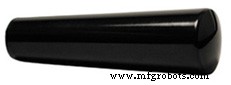
Industrial knobs are the manual interface that enables operators to adjust, fine‑tune, or lock critical parameters on machinery and equipment. Each knob consists of a handle or grip that, when turned, transmits torque to the underlying mechanism.
Among the various types, tapered knobs stand out for their distinctive geometry. Their ridged surface narrows progressively toward the tip, which improves grip and allows for smooth, precise motion. This article explains what tapered knobs are, how they differ from their untapered counterparts, and why they’re a popular choice in many industrial settings.
What Is a Tapered Knob?
A tapered knob is an industrial control that features a handle with concentric ridges that gradually reduce in diameter toward the end. The tapering gives the operator a more natural grip, especially when turning the knob in tight or hard‑to‑reach spaces.
Tapered vs. Untapered Knobs
Industrial knobs can be categorized by the texture of their surfaces:
- Tapered knobs: Ridges shrink toward the tip, offering a flexible range of motion.
- Untapered knobs: Ridges are uniform or the surface is smooth, which can limit rotational range and grip in confined areas.
Key Advantages of Tapered Knobs
Several factors make tapered knobs a preferred choice for many applications:
- Ergonomic grip: The tapering of ridges reduces hand fatigue and improves control.
- Full‑range motion: Operators can rotate the knob freely in any direction, unlike some fixed‑range designs.
- Material versatility: The threaded core is typically brass or stainless steel for durability, while the outer handle is often a softer polymer or plastic for a comfortable feel.
- Durability: The metal core resists wear, while the polymer handle protects against impacts.
Because of these attributes, tapered knobs are commonly found in HVAC controls, automotive dashboards, and industrial machinery where precision and reliability are paramount.
For further technical specifications or purchasing options, consult your equipment supplier or the manufacturer’s catalog.
Industrial equipment
- Ferrous Metals Explained: Composition, Types, and Key Differences
- 5 Common Types of Knobs and Their Practical Applications
- DC vs. AC Motors: Key Differences and Choosing the Right One for Your Application
- The Construction Industry Explained: Scope, Roles, and Global Impact
- Understanding the Printing Industry: Key Roles and Services
- The Fabrication Industry Explained: Processes, Materials, and Impact
- Understanding the Security Industry: Products, Services, and Global Impact
- Understanding the Paint & Coatings Industry: Key Players & Products
- The Semiconductor Industry Explained: Design, Production, and Impact
- Prefabrication Explained: How It Revolutionizes Construction