



Toggle Clamps Explained: A Practical Guide for Beginners
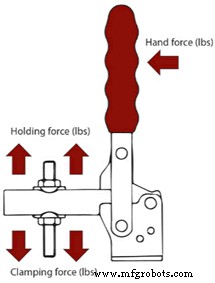
In precision manufacturing, a toggle clamp is indispensable for keeping workpieces stable during cutting, drilling, or machining. Whether you’re a seasoned craftsman or new to the shop floor, understanding how these clamps work can improve safety, accuracy, and workflow.
What Is a Toggle Clamp?
A toggle clamp secures a workpiece by applying a controlled clamping force through a lever‑like arm attached to a horizontal mounting bracket. When the arm is pushed down, the clamp locks in place, compressing the workpiece firmly. Releasing the arm lifts the clamp, freeing the material for repositioning or removal.
Key benefits of using a toggle clamp include:
- Facilitates precise resizing and reshaping of parts
- Reduces risk of operator injury by stabilizing the workpiece
- Enables cleaner, more accurate cuts and drills
- Improves ergonomics by minimizing hand‑held clamping effort
- Simple to operate with minimal training
- Low maintenance requirements once installed
Understanding Clamping Force
The clamping force is the pressure the device applies to the workpiece. A higher clamping force yields a tighter hold, essential for larger or heavier materials. Some clamps feature a single fixed force, while others—especially those with a threaded spindle—apply two distinct forces: one at the inner arm and another at the outer arm, providing a more uniform grip.
Different Types of Toggle Clamps
Horizontal Toggle Clamps
These clamps use a horizontal mounting bracket and arm, keeping both components level when locked. Ideal for flat‑bed workstations where the clamp can sit flush against the table.
Vertical Toggle Clamps
Vertical clamps lock the arm upright, allowing the clamp to hold objects that sit on the floor or are positioned vertically. They’re commonly used for drilling or routing operations.
Push‑Pull Toggle Clamps
Distinct in design, the arm moves horizontally, letting users lock or unlock the clamp by simply pushing or pulling. This configuration is advantageous for quick adjustments on the fly.
Industrial equipment
- Spring‑Energized Seals: A Practical Guide for Reliable High‑Pressure Applications
- Compression Springs Explained: A Beginner’s Guide to Mechanics and Applications
- A Beginner’s Guide to Double‑Ended Screws: Design, Use, and Installation
- Yoke Ends 101: How to Select, Secure, and Use Them Safely
- Spring Plungers Explained: Function, Materials, and Installation
- A Complete Guide to Self‑Closing Hinges: How They Work & Where to Use Them
- Eye Bolts Explained: A Comprehensive Guide for Beginners
- Extension Springs 101: A Practical Guide for Beginners
- Hex Bolts 101: What You Need to Know for Reliable Fastening
- Honing 101: A Beginner’s Guide to Precision Surface Finishing