



How a Car Radiator Works: Inside the Cooling System
Every vehicle relies on a sophisticated cooling system to keep the engine from overheating. The engine generates heat at up to 200 °C under load, so temperature regulation is critical.
Key components include the water pump, thermostat, hoses, fans, and the radiator— a heat exchanger that dissipates engine heat.
Read on to understand how the radiator functions and why it is essential for vehicle reliability.
What Is a Radiator?
The radiator’s job is to remove excess heat from the engine coolant, preventing damage to critical components.
When the thermostat senses the coolant temperature has risen above the set point, it opens to allow hot fluid to flow into the radiator.
Inside the radiator, the coolant passes through a core of thin metal fins that expose the fluid to as much air as possible. A fan, either electric or driven by the engine, pushes air across the fins, accelerating heat transfer to the atmosphere.
After the coolant is cooled, it returns to the engine, completing the cycle.
In short, a car radiator is a heat‑exchange unit that cools the engine‑fluid, which in turn protects the engine itself.
Where Is the Radiator in a Car?
The radiator sits beneath the hood, front of the engine block. Adjacent to it is the coolant reservoir, which provides an overflow space and a way to monitor coolant level.
What Does a Radiator Look Like?
Below is a diagram of a typical automotive cooling system, highlighting the radiator:
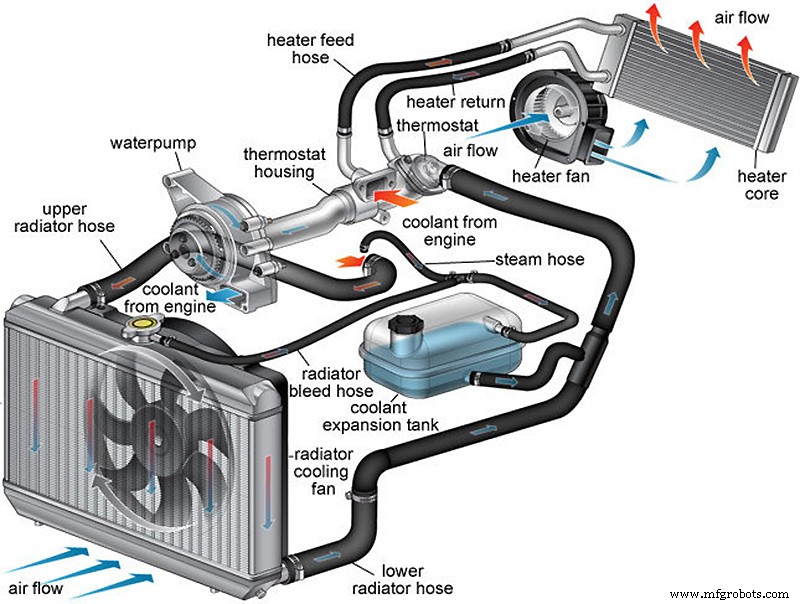
Image credit: mechanicalbooster.com
Parts of a Radiator
The radiator is composed of several integral parts, each playing a specific role in heat dissipation:
- Core: The largest section—a metal block studded with fine cooling fins. Hot coolant releases heat into the fins, which quickly radiates it into the passing air.
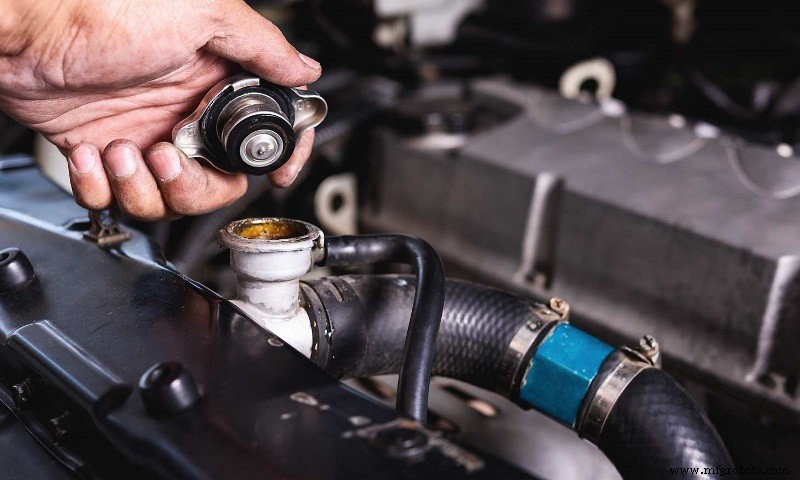
- Pressure cap: Maintains the system’s pressure, raising the boiling point of the coolant and keeping the loop sealed.
- Inlet & outlet ports: The hot fluid enters through the inlet, flows across the core, and exits via the outlet to return to the engine.
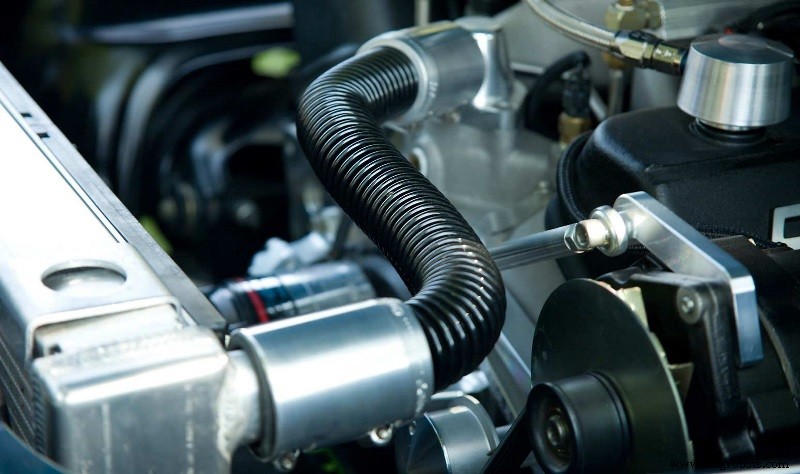
- Radiator hoses: Flexible conduits that carry coolant between the engine, radiator, and reservoir.
Other Key Cooling System Components
Alongside the radiator, the water pump and thermostat orchestrate the coolant’s journey.
The thermostat regulates temperature: it opens to let coolant flow when the engine is hot and closes once the desired temperature is reached.
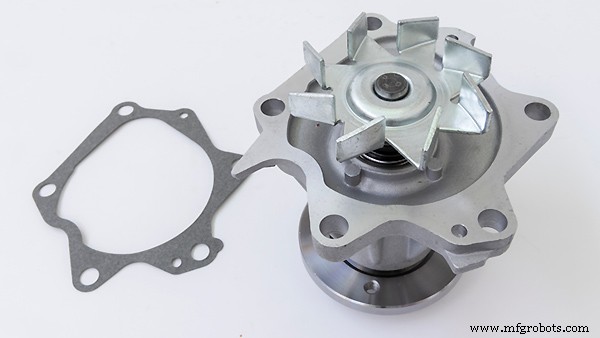
The water pump, driven by the engine’s serpentine belt, forces coolant through the system. Its impeller blades move fluid efficiently, while gaskets and seals keep the loop sealed.
Coolant is not only a heat carrier; it also lubricates components, protects against corrosion, and prevents freezing.
Learn more about coolant composition and benefits here.
Signs Your Radiator Is Failing
Over time, wear and environmental exposure can degrade radiator performance. Watch for the following warning signs:
- Coolant leaks: Cracks or damaged seams will leave a wet patch or puddle beneath the vehicle. Low coolant levels are often the first indicator.
- Discolored coolant or sludge: Normal coolant is thin and green or yellow. Rust or debris can tint it brown or orange and thicken it into sludge, reducing cooling efficiency.
- Consistent overheating: A vehicle that repeatedly climbs above 200 °C likely has a radiator or overall cooling‑system issue.
- Bent or damaged fins: Impact from road debris or improper cleaning can deform fins, choking airflow and trapping heat.
Learn to Work on Car Cooling Systems at UTI
Universal Technical Institute’s Automotive Technology program trains technicians to diagnose and repair cooling‑system problems, including radiator service.
The 51‑week curriculum covers theory and hands‑on labs, equipping graduates with the skills employers demand.
Enroll to gain real‑world experience and become proficient in radiator diagnostics and repair. 1 Request more information today!
Industrial equipment
- How Electromagnets Work: Principles, Operation, and Practical Advantages
- Electrical Grounding Explained: Safeguarding Systems from Arcing and Fires
- How Water‑Jet Cutting Works: A Heat‑Free, Precision‑Cutting Technology
- How Does a Lathe Work? A Complete Guide to Turning Machines
- Turbochargers Explained: How They Boost Engine Performance
- Engine Braking Explained: How It Works and Why It Matters
- Understanding Engine Clutches: How They Work and 3 Key Facts
- Understanding Overrunning Clutches: How They Operate and Why They Matter
- How a 3D Pen Works: From Filament to Finished Model
- How a Two-Stage Pump Delivers Reliable Water Pressure