



How Does a Lathe Work? A Complete Guide to Turning Machines
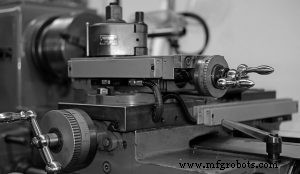
For manufacturers, the lathe is a cornerstone of precision machining. By rotating a workpiece against a fixed cutting tool, it can produce smooth surfaces, precise diameters, and intricate shapes. Tracing back to ancient Egypt, the lathe remains one of the most enduring tools in the workshop.
How a Lathe Operates
All lathes share the same fundamental principle: the workpiece turns while the tool stays still. This contrast with milling machines, where the tool moves and the workpiece is stationary. The rotational motion allows the cutter to remove material evenly, resulting in high‑speed, accurate finishes.
Key components include the headstock, which grips the workpiece and drives its rotation, and the tailstock, which holds long or heavy pieces and provides a second point of support. Together, they form the backbone of the turning process.
Common Lathe Types
Woodworking lathes are tailored for timber, operating typically between 500 and 1,000 RPM. They excel at creating bowls, spindles, and decorative turns.
Metalworking lathes handle harder materials such as aluminum and steel. They require tougher, sharper cutters and often feature higher spindle speeds to achieve fine tolerances.
Glass lathes are specialized for optical components, enabling precise shaping of glass without compromising its integrity.
Other specialized machines include metal‑spinning lathes, ornamental turning lathes, cue lathes, and patternmaker’s lathes, each designed for niche applications.
Conclusion
A lathe is essentially a turning machine that marries a rotating workpiece with a stationary cutting tool. Mastery of its components and proper selection of tool geometry are crucial for achieving the desired precision and surface quality.
See Monroe’s Machining Capabilities.
Industrial equipment
- How Electromagnets Work: Principles, Operation, and Practical Advantages
- Electrical Grounding Explained: Safeguarding Systems from Arcing and Fires
- How Water‑Jet Cutting Works: A Heat‑Free, Precision‑Cutting Technology
- Turbochargers Explained: How They Boost Engine Performance
- How a Car Radiator Works: Inside the Cooling System
- Understanding Overrunning Clutches: How They Operate and Why They Matter
- Inside Demag Cranes: Design, Function, and Industry Impact
- How a 3D Pen Works: From Filament to Finished Model
- Mastering Metal Lathe Operations: A Step-by-Step Guide
- How a Two-Stage Pump Delivers Reliable Water Pressure