



Understanding Machine Presses: Types, Functions, and Applications
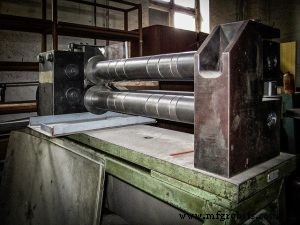
A machine press—often called a forming press—is a robust industrial device that applies controlled pressure to reshape or resize a workpiece. Operated by a skilled toolsetter, the press can perform a wide array of machining tasks, from simple cuts to complex bends. While all machine presses share the same core principle—pressurized force—they differ in mechanisms, capabilities, and typical use‑cases. Below we break down the four most common types and explain how each works.
Punch Press
The punch press is arguably the most familiar in manufacturing. It punches clean holes or embosses into materials using a hydraulic or C‑frame ram. Classic C‑frame presses rely on a single hydraulic ram, while portal‑frame models use a centrally mounted ram for greater precision and higher payloads. Modern punch presses may be manual or CNC‑controlled, allowing for rapid setup and repeatability. With capacities ranging from 5‑ton to 1,000‑ton, punch presses are indispensable for automotive, aerospace, and appliance production.
Stamping Press
Unlike the punch press, a stamping press deforms the workpiece to match a die rather than creating a hole. The part is clamped onto a bolster plate and then sandwiched between a press tool and die. When the tool is forced onto the material, the workpiece adopts the die’s shape. Stamping presses excel at producing complex geometries—such as gears, brackets, and housings—across a variety of metals, plastics, and composites. Their versatility makes them a staple in automotive body panels, consumer electronics, and construction components.
Press Brake
Specialized for metal, a press brake bends sheet metal into precise angles and profiles. Early models were purely mechanical, but contemporary presses are predominantly hydraulic or CNC‑controlled, offering superior accuracy and automation. Press brakes use a similar die‑tool arrangement to stamping presses but are engineered to handle high‑strength steels and other alloys with minimal distortion. They are critical in aerospace, rail, and structural steel fabrication, where clean, repeatable bends are essential.
Screw Press
The screw press, one of the oldest machine press types, uses a screw‑driven ram. Historically employed in the Roman Empire, modern screw presses are still used where precise, incremental force is required—such as in small‑batch metal forming or precision component assembly. Though labor‑intensive, screw presses offer exceptional control over pressure application, making them ideal for delicate or high‑accuracy work.
Industrial equipment
- A Guide to the Key Types of Grinding Machines and Their Applications
- Milling Machines Explained: A Professional Guide to Types and Applications
- Anchor Bolt Types Explained: Cast‑In‑Place, Post‑Installed, and Expansion
- Understanding Hinge Openings: A Guide to Round, Square, Rectangular, and Countersunk Designs
- Choosing the Right Drawer Slides: Center‑Mounted, Under‑Mounted & Ball‑Bearing Options
- Industrial Air Compressors: Types, Benefits & Efficiency Tips
- Discover the 5 Essential Fabrication Machines for Your Machine Shop
- Tube Bending Mastery: Techniques, Applications, & Industry Standards
- Mastering Press Brake Bending: Three Essential Techniques
- Types of Milling Machines: Choosing the Right Tool for Your Project