



Milling Machines Explained: A Professional Guide to Types and Applications
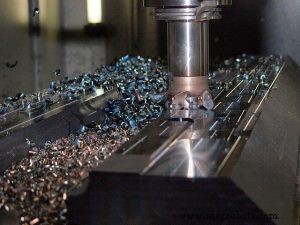
Featuring a rotating cutting tool, milling machines are able to quickly and efficiently remove material from otherwise hard workpieces. The workpiece is secured in place, after which it’s exposed to a cutting tool. Milling machines differ from lathes in the sense that they use a rotating cutting tool. Lathes have stationary cutting tool, whereas milling machines have a cutting tool that rotates as it presses against the workpiece. While all milling machines follow this same principle, there are several different types of them.
Vertical Milling Machine
A vertical milling machine is defined by the vertical orientation of its cutting tool. The cutting tool is placed on a vertical spindle that can be raised or lower. When lowered, it will press into the underlying workpiece, allowing it to remove material. When raised, the cutting tool will pull away from the workpiece. Vertical milling machines simply have a vertically oriented cutting tool.
Horizontal Milling Machine
A horizontal milling machine, on the other hand, is a type of milling machine that has a horizontally oriented cutting tool. They work like all other milling machines, including vertical milling machines, by exposing a workpiece to a rotating cutting tool. While vertical milling machines have a vertically oriented cutting tool, horizontal milling machines have a horizontally oriented cutting tool. The cutting tool moves horizontally across a spindle while pressing into the underlying workpiece.
Bed Milling Machine
A third type of milling machine is bed. Bed milling machines are characterized by the use of a pendant. They still have a spindle that holds the cutting tool, but the spindle is secured to a pendant. The pendant can be raised or lower so that the cutting tool can reach the workpiece. Bed milling machines are essentially a variant of vertical milling machines, with the only difference being that they have a pendant.
Box Milling Machine
Also known simply as a box mill, a box milling machine is a simple, low-end machine that’s capable of performing basic milling processes. They are called “box milling machines” because they feature a cutting tool on a box way. The box way can move up and down to remove material from the underlying workpiece.
Floor Milling Machine
Floor milling machines are characterized by the use of table rows. They have a horizontally oriented spindle that moves across a set of tracks alongside the table rows. Over the years, floor milling machines have been largely replaced with Computer Numerical Control (CNC) milling machines. Nonetheless, some small businesses and hobbyists continue to use them.
See Monroe’s Machining Capabilities.
Industrial equipment
- A Guide to the Key Types of Grinding Machines and Their Applications
- Understanding Machine Presses: Types, Functions, and Applications
- Anchor Bolt Types Explained: Cast‑In‑Place, Post‑Installed, and Expansion
- Understanding Hinge Openings: A Guide to Round, Square, Rectangular, and Countersunk Designs
- Choosing the Right Drawer Slides: Center‑Mounted, Under‑Mounted & Ball‑Bearing Options
- A Comprehensive Guide to CNC Machine Types and Their Applications
- Explore 15 Essential Milling Machine Types for Precision Metalwork
- Tube Bending Mastery: Techniques, Applications, & Industry Standards
- Manufacturing Equipment Types: Production, Assembly, and Operator‑Support Machines
- Types of Milling Machines: Choosing the Right Tool for Your Project