



How Car Braking Systems Operate: Disc vs. Drum, Parts, Wear Signs, and Technician Careers
The braking system is the vehicle’s most critical safety component. When the brake pedal is depressed, it reduces wheel rotation, bringing the vehicle to a complete stop.
Inside the brake system, complex hydraulics and mechanical elements collaborate to achieve safe deceleration. Read on to explore the types, key components, and operating principles.
Types of Braking Systems
Passenger cars typically employ either disc brakes or drum brakes. Both achieve stopping, but their designs and operational mechanics differ.
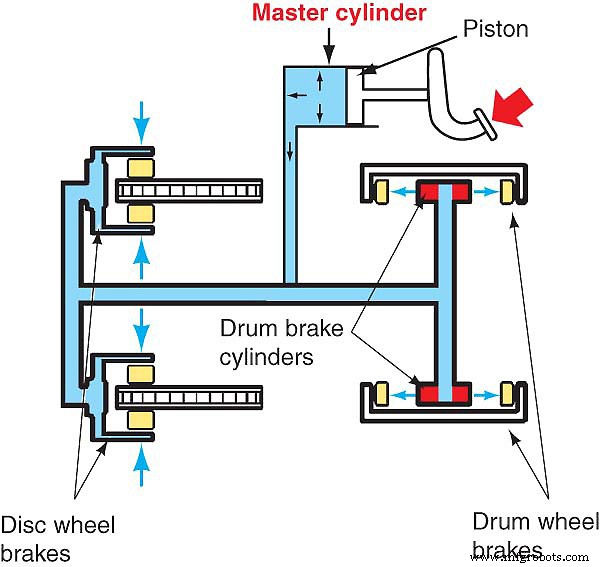
Disc brakes are mandatory on all front wheels and often on all four in U.S. passenger cars. Drum brakes, by contrast, appear only on the rear in most domestic models.
Drum Brakes
The first in‑tire brakes were drum systems, introduced in 1900 and patented by Louis Renault in 1902. Early models relied on mechanical linkages, but by the mid‑1930s hydraulics became standard.
A master cylinder delivers brake fluid to a wheel cylinder inside the drum. The fluid pressure expands pistons that push brake shoes against the drum’s inner surface, generating friction that slows the wheels.
Disc Brakes
Disc brakes were patented in the same year as drum brakes, but it wasn’t until the mid‑20th century that they became both practical and affordable for automotive use.
Jaguar demonstrated disc brakes’ superior performance in 1953, winning a race against drum‑braked competitors. That same year, a production model featured all‑disc brakes, setting the industry standard.
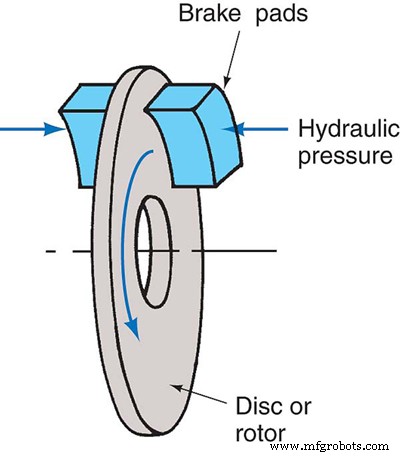
In a disc system, the master cylinder directs brake fluid to a caliper. The caliper’s pistons press brake pads against a steel rotor, producing friction that decelerates the wheels.
Drum vs. Disc Brakes
Although drum brakes still serve niche roles, manufacturers increasingly favor disc brakes for their numerous advantages:
- Cleaning: Unlike drum brakes, which require periodic cleaning due to brake dust accumulation on the shoes, disc brakes self‑clean as pads contact rotors, sweeping away debris.
- Consistent performance: Disc brakes better manage heat, reducing the risk of brake fade that can lengthen stopping distances.
- More stopping power: Advances in materials and design have made disc brakes more durable and capable of stopping vehicles faster.
- Handling during wet conditions: Disc brakes are open to the air, allowing water to drain quickly, which improves performance in wet weather compared to drum brakes that can trap water.
Parts of the Braking System
Each component of a braking system contributes to safe stopping. Although disc and drum brakes share some parts, they differ significantly in their architecture.
Drum Brake Parts
A drum brake assembly includes a master cylinder, wheel cylinders, primary and secondary shoes, springs, retainers, and adjustment mechanisms.
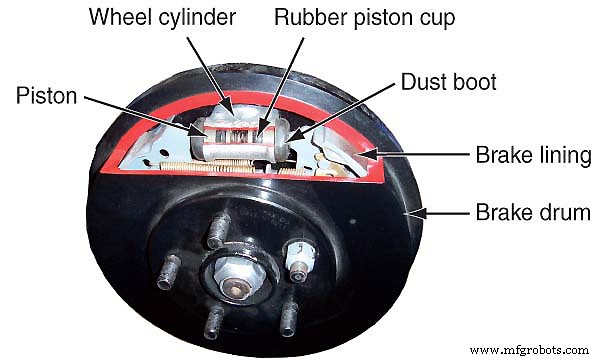
Durability varies with use. Drum housings generally endure 150,000–200,000 miles, while shoes wear out sooner—typically 35,000–60,000 miles depending on driving habits.
Disc Brake Parts
Key components of a disc brake system are the master cylinder, caliper, rotor, and pads.
Pad lifespan depends on driving style and conditions. Technicians estimate most vehicles achieve 25,000–65,000 miles of pad life and 30,000–70,000 miles of rotor life.
Regularly monitor braking feel and schedule inspections to catch wear before it becomes critical.
Signs Brake Parts Are Wearing Down
Several symptoms indicate brake wear. Prompt inspection ensures timely repairs:
- Vibrations in steering wheel: Uneven rotor wear or warping can cause the wheel to vibrate during braking.
- Having to press the brake pedal down hard to stop: Increased pedal effort or a spongy feel often signals worn components.
- Loud noises: Screeching, grinding, or squealing may indicate worn pads or shoes.
- Car pulling to one side: Uneven pad wear can cause the vehicle to drift during braking.
- Brake light: A dashboard brake‑system warning light should prompt immediate inspection.
Work on Braking Systems as an Automotive Technician
A career as an automotive technician offers hands‑on mastery of braking systems. The skilled trades are expanding; by 2029, the U.S. expects over 720,000 service technicians and mechanics.
UTI’s automotive technology program provides the practical experience employers demand.
The 51‑week program covers essential topics, including braking systems, enabling graduates to enter the workforce in under a year.
Want to learn more? Request information or call 800‑834‑7308 today.
Industrial equipment
- How Car Suspension Systems Work—and Why They’re Critical for Safety
- How Car Air‑Conditioning Systems Operate: A Technical Guide
- How SCADA Systems Operate: Monitoring and Controlling Industrial Processes
- Understanding Electric Brakes: How They Operate and Why They Matter
- Electric Brakes in Industrial Vehicles: Functionality & Benefits
- Understanding Emergency Brakes on Construction Vehicles: How They Keep You Safe
- Understanding Wet Brakes: Function, Benefits, and Safety Impact
- Drum Brakes Explained: How They Work and Their Industrial Impact
- Understanding Brake Calipers: Function, Types, and Maintenance Tips
- How Disc Brakes Work: A Complete, Easy-to-Understand Guide