



Standard Hinges vs Loose Joint Hinges: Understanding Key Differences
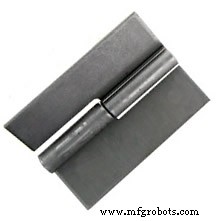
When designing or refurbishing doors, cabinets, or gates, the choice of hinge can influence both function and aesthetics. While both standard and loose joint hinges facilitate a controlled swing, their construction and installation nuances set them apart. Below, we break down each type, highlighting the engineering that underpins their performance.
What Is a Standard Hinge?
A standard hinge, often the most familiar type, consists of two leafs that meet along a shared knuckle. Each leaf carries a complementary set of half‑knuckles that, when aligned, form a single continuous knuckle. A pin threaded through the center of this knuckle keeps the leafs together, enabling smooth rotation while maintaining structural integrity.
What Is a Loose Joint (Slip) Hinge?
Also called a slip hinge, a loose joint hinge uses two distinct components: one leaf houses a pin, and the other contains a matching hole. This asymmetrical design means the hinge can be partially detached without removing the entire assembly—ideal for applications where frequent access or maintenance is required.
Key Differences Between Standard and Loose Joint Hinges
The primary distinction lies in the knuckle configuration:
- Standard Hinge: Both leafs share identical knuckle patterns, allowing them to merge into a single knuckle secured by a pin.
- Loose Joint Hinge: One leaf features a hollow tube with a central hole, while the other carries the pin. The two leafs are assembled by aligning the pin with the hole, enabling the hinge to be removed from one side while the other remains attached.
Because of this design, a door fitted with a loose joint hinge can be lifted off its frame, leaving the frame‑mounted leaf intact. This feature simplifies repairs, replacement, or modification tasks without disturbing the entire hinge system.
Industrial equipment
- Thermoplastic vs. Thermoset: Understanding Key Differences in Polymer Materials
- Wheels vs. Casters: Understanding the Key Differences
- O‑Rings vs. Gaskets: Understanding Their Roles and Key Differences
- Loose Joint Hinges: Design, Function, and Advantages
- Forehand vs Backhand Welding: Key Differences and When to Use Each Technique
- Iron vs. Steel: Key Differences Explained
- Cut vs Wire Nails: Understanding the Key Differences for Construction
- Milling vs. Grinding: Key Differences Explained
- Washers vs. Gaskets: Key Differences Explained
- DC vs. AC Motors: Key Differences and Choosing the Right One for Your Application