



TIG vs. MIG Welding: Key Differences and How to Choose the Right Technique
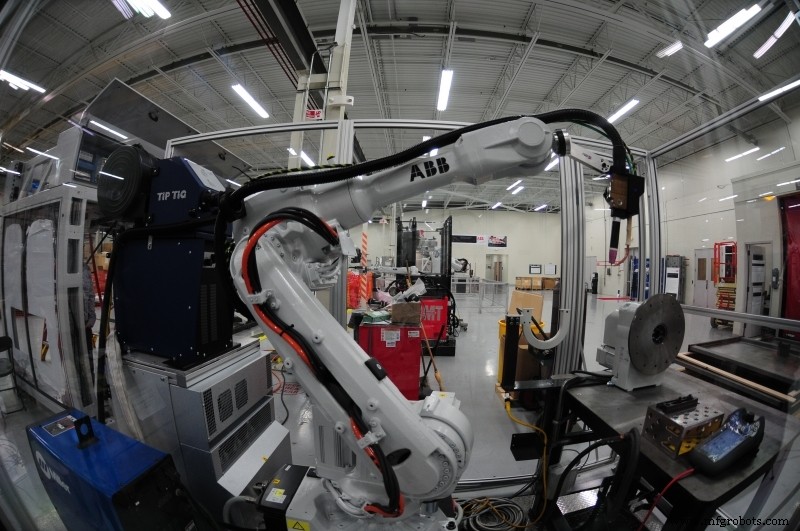
Though similar in the name, TIG and MIG welding have quite a few differences. Deciding which one is suitable for your company depends on the precision of weld required, time allocated for setup, utilization and initial cost. There are several benefits and fall backs to using TIG and MIG welding, depending on your facility's needs.
MIG Welding, or Metal Inert Gas welding, combines two pieces of metal together with a consumable wire connected to an electrode current. A wire passes through the welding gun at the same time as the inert gas. The inert gas protects the electrode from contaminants.
TIG Welding, also known as Tungsten Inert Gas welding, uses non-consumable tungsten, along with an inert gas, to weld two work pieces together. The tungsten electrode provides the electricity, but not the filler, for the welding process. While it can use filler, it sometimes creates a weld where one part melts into another.
Interested in automating a MIG or TIG welding operation? RobotWorx is here to help. Our highly-trained staff can assist you in deciding which application is right for you. They can also help you design and fabricate your MIG or TIG welding system. For more information, contact RobotWorx at 877-762-6881 or contact us here.
Industrial robot
- MIG vs. TIG Welding: Selecting the Right Arc Welding Technique for Your Project
- Forehand vs Backhand Welding: Key Differences and When to Use Each Technique
- MIG vs. TIG Welding: Choosing the Right Technique for Your Project
- MIG vs. TIG Welding: Key Differences and Applications
- MIG vs. TIG Welding: Key Differences Explained
- TIG vs MIG Welding Explained: Types, Differences, and Key Advantages
- TIG vs MIG Welding: Key Differences & How to Choose
- MIG vs. TIG Welding: Which Technique Delivers Superior Performance?
- MIG vs. TIG Welding: Which Process Best Fits Your Project
- Effortless MIG to TIG Conversion for Industrial Welding Robots