



Understanding Non‑Expendable Mold Casting: Types, Benefits, and Applications
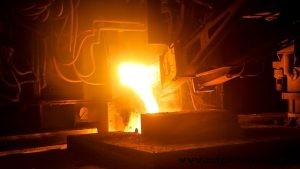
Casting is a foundational metalworking technique that transforms molten metal into a solid part by pouring it into a mold cavity. While the basic principle remains the same, the method chosen determines whether the mold can be reused—classifying casting processes into expendable or non‑expendable categories.
What Is Expendable Mold Casting?
In expendable mold casting, the mold is designed to hold molten metal for a single cycle. Because the metal—often iron, steel, or aluminium—reaches temperatures of 2,800°F or higher, the mold’s interior can suffer thermal shock, deformation, or complete destruction. Consequently, the mold is discarded or re‑formed after each cast. Typical examples include:
- Sand molding
- Shell molding
- Investment (lost‑wax) molding
- Plastic (polymer) molding
- Lost‑foam casting
Although these molds are not reusable in the traditional sense, many manufacturers recover and re‑shape the material for future use, which can reduce waste and cost.
What Is Non‑Expendable Mold Casting?
Non‑expendable, or reusable, mold casting employs robust materials—typically metals—that can withstand repeated exposure to molten metal without significant wear. The durability of these molds enables high‑volume production and precise dimensional control. Common non‑expendable processes include:
- Permanent (metal) molding
- Die casting
- Centrifugal casting
- Continuous casting
- Semi‑solid casting
Because the mold can be reused many times, the upfront cost is higher, but the per‑unit cost decreases substantially, making it ideal for mass production and high‑precision components.
In Conclusion
Choosing between expendable and non‑expendable mold casting hinges on factors such as production volume, part complexity, material cost, and required tolerance. Expendable molds offer simplicity and lower initial investment, while non‑expendable molds deliver superior repeatability and cost efficiency for large runs.
Industrial equipment
- Strand Casting in Manufacturing: Process, Benefits, and Applications
- Permanent Mold Casting Explained: Process, Types, and Advantages
- Investment Casting Explained: The Precision Lost-Wax Process
- Sand Casting Explained: The Fundamentals of Metal Mold Fabrication
- Understanding Metal Casting: Process, Benefits, and Applications
- Metalcasting Fundamentals: History, Techniques, and Modern Applications
- Understanding Expendable Mold Casting: Key Differences from Investment Casting
- Sand Casting vs. Shell Mold Casting: Choosing the Right Metal Casting Process
- Sand Casting Explained: A Proven, Cost‑Effective Metal Fabrication Method
- Investment Casting Explained: A Timeless Manufacturing Process