



Strand Casting in Manufacturing: Process, Benefits, and Applications
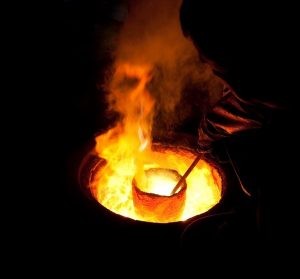
Manufacturing firms routinely use molds and dies to shape metal into precise billets and slabs. While traditional casting has long served this purpose, strand casting—also known as continuous casting—has emerged as a faster, more versatile alternative since its invention in the 1950s.
What Is Strand Casting?
Strand casting converts molten metal into solidified billets or slabs in a continuous, automated flow. Unlike the one‑off pour‑into‑mold method of older techniques, the process feeds molten metal through a series of copper‑lined passages, allowing for controlled cooling and rapid production.
How It Works
1. Feeding the Tundish
Molten metal is first poured into a tundish, a reservoir that regulates flow and temperature before the metal enters the casting head.
2. Cooling Passages
The metal travels through copper‑lined mold passages. Copper’s high thermal conductivity promotes uniform cooling, forming a solid outer shell while the core remains liquid.
3. Misting and Solidification
Sprayers deliver fine misted water to the forming strand, accelerating surface cooling and ensuring a smooth finish. Once the strand solidifies, it is extracted from the mold for further processing.
Key Advantages
• Speed – Continuous casting significantly reduces cycle times compared to batch pouring. • Automation – The process is highly automatable, lowering labor costs and improving consistency. • Versatility – Works with a wide array of metals, including steel, iron, copper, and bronze. • Quality – Controlled cooling yields billets with uniform microstructure and reduced defect rates.
When to Use Strand Casting
Strand casting is ideal for high‑volume production of standard billets and slabs, such as those used in structural steel, automotive components, and heat‑exchanger plates. Its efficiency makes it a staple in facilities prioritizing throughput and precision.
Industrial equipment
- What is VMC Machining? An Expert Overview of Vertical Machining Centers
- Understanding Non‑Expendable Mold Casting: Types, Benefits, and Applications
- Permanent Mold Casting Explained: Process, Types, and Advantages
- Press Joining: The Fast, Clean Sheet‑Metal Bonding Technique
- Sand Casting Explained: The Fundamentals of Metal Mold Fabrication
- Understanding Metal Casting: Process, Benefits, and Applications
- Smart Manufacturing Explained: Transforming Production with IoT
- Automated Manufacturing: How Computerized Control Transforms Production
- Sand Casting Explained: A Proven, Cost‑Effective Metal Fabrication Method
- Microfabrication Explained: Small-Scale Manufacturing for Advanced Technologies