



Permanent Mold Casting Explained: Process, Types, and Advantages
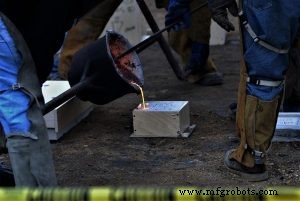
Molding is a foundational manufacturing technique where a heated or molten material is introduced into a die cavity, producing a part that mirrors the die’s geometry. Permanent mold casting differentiates itself by employing a durable, reusable mold, allowing manufacturers to produce numerous high‑quality parts from the same mold.
Overview of Permanent Mold Casting
Also known simply as permanent molding, this process utilizes molds crafted from robust metals or alloys—such as aluminum, copper, steel, iron, graphite, or lead. The mold is preheated, typically up to 400 °F (≈204 °C), and coated with a release agent to prevent sticking. Molten material is then poured or injected into the cavity; once it cools and hardens, the finished casting is removed and the mold is ready for the next cycle. Industrial operators often run these molds hundreds of times, amortizing the initial cost over many parts.
Types of Permanent Mold Casting
Gravity Casting relies on gravity to fill the cavity. The preheated mold is simply poured into, and the material settles naturally. This method is ideal for complex shapes where precise filling is required without the need for additional pressure.
Slush Casting creates hollow parts by allowing the molten material to cool just enough to form a thin shell around the cavity. The remaining liquid is drained, leaving a void. This technique is common in automotive trim and aerospace components where weight savings are critical.
Low‑Pressure Casting introduces material under controlled, low pressure—often using an inert gas or a mechanical plunger. The system forces the molten alloy into the cavity, ensuring complete fill and reducing defects such as voids or air pockets. Low‑pressure casting is favored for high‑strength alloys and intricate geometries.
By selecting the appropriate casting method, manufacturers can balance cost, part quality, and production speed, making permanent mold casting a versatile choice for high‑precision metal parts.
Industrial equipment
- Understanding Non‑Expendable Mold Casting: Types, Benefits, and Applications
- Strand Casting in Manufacturing: Process, Benefits, and Applications
- The Four Primary Methods of Permanent Mold Casting
- Investment Casting Explained: The Precision Lost-Wax Process
- Sand Casting Explained: The Fundamentals of Metal Mold Fabrication
- Understanding Metal Casting: Process, Benefits, and Applications
- Master Permanent Mold Casting: A Beginner's Guide to Durable, High-Volume Metal Parts
- Permanent Mold Casting vs. Sand Casting: Choosing the Right Metal Casting Technique
- Sand Casting Explained: A Proven, Cost‑Effective Metal Fabrication Method
- Investment Casting Explained: A Timeless Manufacturing Process