



The Four Primary Methods of Permanent Mold Casting
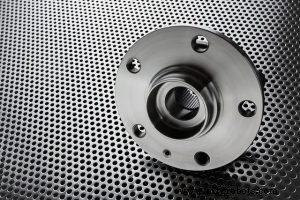
Permanent mold casting—also known as sandless casting—relies on a reusable steel or graphite mold to produce complex, high‑quality parts. Because the mold is reused, the process delivers tight dimensional control and excellent surface finish across multiple cycles. There are four main techniques used to fill these permanent molds with molten metal:
#1 – Gravity Permanent Mold Casting
In gravity casting, the preheated mold (typically 300–400 °F) receives molten metal that flows under its own weight into the cavity. The preheat reduces metal viscosity and promotes uniform filling, leading to a lower defect rate compared to other permanent‑mold methods.
#2 – Slush Permanent Mold Casting
Slush casting is a specialized variation designed for hollow parts. Molten metal is poured into the cavity but is allowed to solidify partially—forming a shell around the inside of the mold. Once the shell is set, it is ejected, leaving a hollow core.
#3 – Low‑Pressure Permanent Mold Casting
Low‑pressure casting introduces a mild gas pressure (3–10 PSI) to drive the molten metal into the mold. Although the pressure is modest, it ensures complete cavity fill and reduces turbulence, producing parts with consistent geometry.
#4 – Vacuum Permanent Mold Casting
Vacuum casting uses negative pressure to pull molten metal into the cavity. This technique often yields superior mechanical properties—such as reduced porosity and improved tensile strength—compared to low‑pressure casting, making it ideal for high‑performance applications.
Industrial equipment
- Understanding Non‑Expendable Mold Casting: Types, Benefits, and Applications
- Shell Mold Casting Demystified: A 6-Step Process for Precision Casting
- Permanent Mold Casting Explained: Process, Types, and Advantages
- Mastering Patternmaking: Crafting Precise Wax & Wood Patterns for Metal Casting
- Ultimate Guide to Casting Processes: Techniques & Applications
- Discover the Value: Why Investment Casting Delivers Superior Precision & Quality
- Mastering Metal Casting: From Molten Metal to Finished Parts
- Metalcasting Fundamentals: History, Techniques, and Modern Applications
- Master Permanent Mold Casting: A Beginner's Guide to Durable, High-Volume Metal Parts
- Permanent Mold Casting vs. Sand Casting: Choosing the Right Metal Casting Technique