



Five Essential Hinge Mount Types Explained
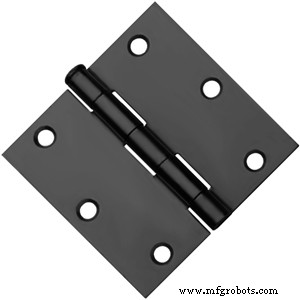
When selecting a hinge, the mount type determines how it attaches to the two pieces of wood or metal. Door hinges, for instance, are typically mounted on the door and its frame, but other applications require different mounting solutions. Below, we break down the five most common hinge mount types used in the industry.
#1 Top-Mount Hinges
In a top‑mount hinge, the knuckles—the interlocking plates that form the hinge’s pivot—are positioned above the hinge face. This design places the pivot line on the upper surface of the mounting material, giving the hinge a clear visual line and often a more robust appearance.
#2 Flush-Mount Hinges
Flush‑mount hinges are the inverse of top mounts. Their knuckles sit below the hinge face, so the hinge line aligns with the surface of the material. This results in a smooth, almost invisible profile that is ideal for cabinetry or trim work where a low profile is desired.
#3 Swaged-Mount Hinges
Swaged mounts combine elements of both top and flush designs. The knuckles are staggered—some above and some below the hinge face—creating a balanced pivot that can handle heavier loads while maintaining a streamlined appearance.
#4 180°‑Range Hinges
As the name implies, 180° hinges allow a full 180‑degree swing. They achieve this by incorporating two knuckles per leaf, which distributes the load evenly and permits the hinge to open or close completely without binding. These are common in automotive panels and large doors.
#5 Offset-Mount Hinges
Offset hinges are engineered for irregular or uneven surfaces. By angling the leafs, they can be installed on boards or panels that are not perfectly flat, ensuring a smooth operation even when the workpieces have slight variations.
While there are many specialized hinge designs, the five types above—top, flush, swaged, 180°, and offset—cover the vast majority of applications. Choosing the correct mount type is essential for achieving proper alignment, smooth operation, and long‑term durability.
Industrial equipment
- Quick‑Release Pin Handles: Types, Features, and Choosing the Right One
- Four Key Slotted Drive Types for Fasteners Explained
- Living Hinges: The Rust‑Proof, Silent, and Customizable Advantage Over Metal
- A Complete Guide to Self‑Closing Hinges: How They Work & Where to Use Them
- Five Key Fusion Welding Techniques Explained
- 5 Key Wireless Standards Powering IoT Connectivity
- Choosing the Right Lift Truck: A Guide to the Best Types for Your Business
- Wet vs. Dry Brakes: How to Select the Right Type for Your Equipment
- Choosing the Right 3D Modeling Technique: A Guide for Designers
- Understanding Fuses: A Comprehensive Guide to Protecting Your Circuits