



How to Choose the Right Magnet for Your Project: A Practical Guide
If you’re a cabinet builder, metal fabricator, or any professional who uses magnets in your products, this guide is for you. Whether you need a single magnet for a prototype or bulk orders for mass production, understanding what to look for can save you time and money.
Why Modern Magnets Matter
Today’s magnets are lightweight, affordable, and come in a vast array of sizes and strengths. Because they’re mass‑produced, the right magnet for your application is almost always available from a standard catalog. Knowing how to navigate that catalog is the key to getting the best value.
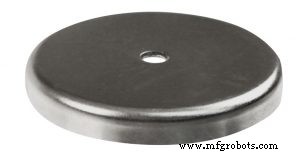
Most high‑quality magnets are manufactured overseas and distributed through established channels. For small orders (under 10,000 pieces), an industrial supplier like Monroe Engineering is a reliable source. Large‑volume customers usually go through a stock‑and‑sell distributor that has direct ties to the manufacturer. These distributors can offer the best mix of price, lead time, and quality.
Standard Magnet Shapes
Every magnet begins as one of these common shapes. While you can perform secondary shaping—such as adding a half‑dome to a bar—those custom processes add tooling and material costs, which can be significant at low volumes.
- Arcs
- Discs
- Blocks
- Cylinders/Rods
- Bars
- Strips
- Rings
- Spheres
- Cubes
- Cones
- Flexible strips and sheets
- Adhesive‑backed strips and sheets
Common Magnet Coatings
Magnets are hard, but they can chip or corrode. Most are coated for durability and aesthetics:
- Nickel – bright silver finish
- Plastic – any color, typically black or brown
- Rubber – dark, flexible coating
- Molded plastic or rubber – embedded during injection molding
Key Magnet Categories & Applications
Choosing a magnet starts with understanding what it will do. Here’s a quick reference:
- Industrial Lift Magnets – Used in material handling; often switched or mechanically polarized.
- Industrial Sweeping & Tank Magnets – Pick up metal chips or parts in tanks.
- Pot Magnets – Steel covers that allow hooks, studs, and clips to attach.
- Permanent Magnets – Retain magnetism unless exposed to extreme heat.
- Electromagnets – Require electric current; can be extremely powerful.
- Temporary Magnets – Gain magnetism only in a field.
- Motor Magnets – Integral to motors; account for ~35% of all magnet production.
- Catches, Latches, and Clasps – Light‑to‑medium duty for cabinets, furniture, appliances.
- Electronics – From TVs to cell phones; magnets are ubiquitous.
- Heavy‑Duty vs Light‑Duty – Heavy‑duty lifts loads beyond human strength; light‑duty is easily handled by hand.
- Rare‑Earth Magnets – Neodymium (Neofor), Ceramic Ferrite, Samarium‑Cobalt, Alnico.
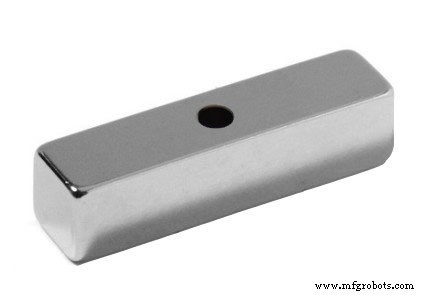
How Magnet Load Ratings Work
For most users, the simplest metric is the direct‑pull force (lbs or kg). It’s the force required to separate a magnet from a metal surface that’s in full contact. Because magnets resist shear less effectively, you can often slide a magnet sideways more easily than pulling it straight apart.
Field strength through an air gap is also critical—for example, a refrigerator magnet can’t lift a stack of paper thick enough to block the magnetic field.
The industry standard for performance is the Maximum Energy Product measured in Mega Gauss Oersteds (mGOe). Modern Neodymium magnets are labeled with an “N” followed by a number (e.g., N‑52). A trailing letter indicates temperature tolerance; absence of a letter means it meets the standard for that rating.
For detailed breakaway force data, refer to MDFA‑101‑95 published by the Magnet Distributor and Fabricator Association.
Understanding Magnet Operation
Magnets generate an energy field that attracts ferromagnetic materials (iron, steel, cobalt). Modern magnets are produced by aligning magnetic powder particles, compressing them, and sintering at high temperatures. The stronger the alignment, the greater the field reach and pull.
Choosing the Right Magnet Partner
Because most magnets are made in Asia under license, your best bet is a reputable stock‑and‑sell distributor. Look for partners with strong financial backing, a wide product range, and responsive customer service. A quick phone call to a knowledgeable representative can help you avoid costly specification errors.
See Monroe’s Magnets
Industrial equipment
- Cup Magnets: Design, Function, and Selection Guide
- Understanding Magnet 'Reach Out': How Far Their Magnetic Field Extends
- Mastering Caster Selection: Practical Guidance for Buyers and Manufacturers
- Key Considerations When Buying a Used CNC Machine
- Key Factors to Evaluate Before Purchasing a Used CNC Machine
- Key Factors to Consider When Choosing an Ironworker
- Key Factors to Consider When Purchasing a Plate Rolling Machine
- Key Factors to Consider When Purchasing Angle (Profile) Rolls
- Thermoplastics Explained: Definition, Properties, and Recycling Benefits
- How to Choose the Right D9 Bulldozer: Key Factors for Buyers