



Choosing the Right Sand: Key Types for Superior Sand Casting
Perhaps the oldest casting process known to man is sand casting. Its history traces to ancient times. It is a relatively simple process that uses available materials and can be used to create anything from small bearing housings to large engine blocks.
At its most basic form, sand casting uses sand, or a sand composite, that is compressed into a desired shape or cavity in a mold. The mold is then filled with a chosen molten metal, cooled, and the casting removed to create the desired product. Sand casting is popular in that it is versatile. It can be used for small or large pieces of various shapes and designs. While sand casting has been used for centuries, the sand casting process remains relatively unchanged. While there are other casting processes available today to produce particular parts and products, sand casting remains extremely popular. It is not without its drawbacks, however.
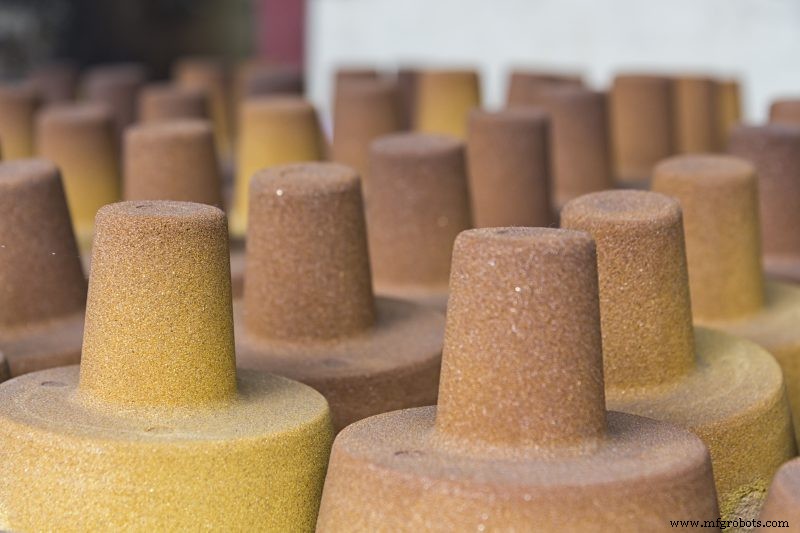
Disadvantages of the Sand Casting Process
Because sand casting results in more porous pieces, they have lower strength than pieces created in other casting processes. Because of variances in how the materials expand and contract, during the cooling process. Occasional casting imperfection are unavoidable. There is also the issue of surface texture. Sand castings often produce a rougher surface texture that if undesired, will require additional machining.
This surface texture is influenced by the type of sand used and other steps taken during the sand casting process.
Types of Sand Used in the Process
There are two basic types of sand used in the modern sand casting process. They are Green Sand and Dry Sand.
- Green Sand: This is a blend of sand and water, silica, pitch and potentially other ingredients to produce a moist compound to produce a desired mold. An advantage of green mold casting is that after castings are made, sand can be used repeatedly. A pattern is placed on a mold board and the wet sand is pressured around it. In the automatic molding process, machinery will pressure or shake the sand into crevices. Molten metal is then poured in the mold. After the metal cools, the mold is either broken or a mold release agent used to free the casting.
- Green sand casting is flexible, versatile and because aggregate can be reused, it is environmentally friendly. Because materials are commonly available and reusable, it also makes it an affordable process.
- Resin sand: It is a mixture of quartz sand and resin. The chemical reaction created by the resin helps to bind and stiffen the quartz sand to make solid, hard and strong molds with a smooth surface finish. Compared to the green sand mold, resin sand molds take more time to mix and burn. Resin sand casting is frequently used in foundries where big, heavy pieces like construction materials and engine blocks are produced. Taking the time to bake molds at constant temperatures also leads to mold that are more precise.
- Resin sand casting is an excellent choice for intricate and detailed patterns and molds. It is also more expensive than green sand casting.
Sand casting companies generally offer a variety of choices to provide the best possible solutions for your specific needs.
Should you have questions we invite you to contact the team at IMPRO.
Industrial Technology
- Moulding Sand in Metallurgical Casting: Types, Constituents, and Key Characteristics
- Top Sand Materials for Precision Moulding
- Understanding Casting Defects: A Comprehensive Guide to Types & Causes
- Explore 6 Key Casting Processes in Metal Foundries
- Understanding Cores in Sand Casting: Their Role & Benefits
- Understanding Sand Casting: The Step‑by‑Step Process Explained
- Vacuum Investment Casting: Precision, Quality, and Reliability for High-Integrity Metal Parts
- Exploring Sand Casting Equipment: Types & Applications
- Choosing Resin Sand Casting: When and Why It’s the Right Process
- Mastering the Sand Casting Process: Techniques and Best Practices