



3D Printing vs Additive Manufacturing: Understanding the Key Differences
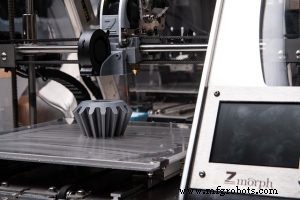
While the terms “3D printing” and “additive manufacturing” are often used interchangeably, they actually describe different scopes of technology. 3D printing is a specific subset of additive manufacturing focused on building objects layer by layer, whereas additive manufacturing encompasses a broader range of processes that add material in various ways.
What Is 3D Printing?
3D printing creates a physical object by depositing successive layers of material—usually polymer, but increasingly metals, alloys, and ceramics—according to instructions from CAD software. Unlike subtractive methods such as milling, which remove material, 3D printing builds up the part from the ground up.
What Is Additive Manufacturing?
Additive manufacturing is the umbrella term for all processes that add material to form an object. It includes not only traditional 3‑D printers but also advanced industrial techniques such as electron‑beam melting (EBM), selective laser melting (SLM), and directed energy deposition (DED). All these methods rely on a machine guided by CAD data to assemble parts by adding material, whether in discrete layers or through continuous streams.
Key Differences Between 3D Printing and Additive Manufacturing
• Scope – 3D printing is a layer‑by‑layer approach, primarily used in consumer and prototyping contexts. Additive manufacturing covers a wide array of techniques, including those that do not rely on layer deposition.
• Materials – While most hobbyist 3D printers use polymer filaments, industrial additive manufacturing often employs high‑performance metals, alloys, and even ceramics.
• Applications – 3D printing is popular for rapid prototyping and small‑scale production, whereas additive manufacturing is the backbone of aerospace, medical, and automotive manufacturing for complex, high‑strength parts.
Conclusion
In short, all 3D printers are additive manufacturing machines, but not all additive manufacturing machines are 3D printers. Understanding this distinction helps you choose the right technology for your project—whether you need a quick prototype or a high‑precision industrial component.
Learn more about Monroe’s Additive Printing Service or get your parts printed now!
Industrial equipment
- Joining vs. Forming in Manufacturing: Key Differences Explained
- Infill vs. Shell in 3D Printing: Understanding Their Roles and Differences
- Planing vs. Shaping in Manufacturing: Key Differences Explained
- Why 3D Printing Is Revolutionizing Modern Manufacturing
- ABS vs Nylon in 3D Printing: Key Differences Explained
- SLS vs SLA 3D Printing: Key Differences and How to Choose
- CNC Machining vs 3D Printing: Key Differences Explained
- Additive Manufacturing vs 3D Printing: Understanding the Difference
- How Selective Laser Sintering (SLS) Converts 3D CAD Designs into Solid Parts
- Subtractively vs Additively Manufactured Parts: Key Differences Explained