



Lost‑Foam vs. Full‑Mold Casting: Key Differences & Benefits for Modern Foundries
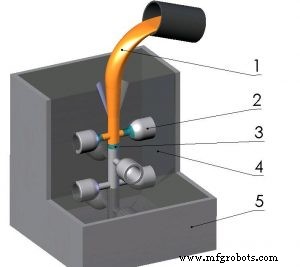
In the world of evaporative‑pattern casting, lost‑foam and full‑mold techniques are widely used for producing complex metal components. While both rely on a pattern that vaporises when molten metal is introduced, they differ in pattern material, mould construction, and typical application.
What Is Lost‑Foam Casting?
Lost‑foam casting starts with a foam (usually expanded polystyrene) pattern that is placed inside a sand mould. When the pattern is heated by molten metal, it vaporises, leaving a cavity that is immediately filled with metal. The process eliminates the need for a separate core or mould‑lining, giving a smooth finish and high dimensional accuracy.
What Is Full‑Mold Casting?
Full‑mold casting uses a wax pattern that is wrapped in a sand‑filled core. The wax is completely burnt out before the mould is filled. Because the sand acts as a mould material, the process can produce a wide range of shapes with a low set‑up cost. It is the most common method for large‑scale production of complex parts.
Key Differences
- Pattern material: foam vs. wax.
- Mould type: sand‑filled for both, but lost‑foam relies on a full sand mould, whereas full‑mold has a sand core that surrounds the wax pattern.
- Surface finish: lost‑foam produces a near‑perfect surface with minimal machining, full‑mold may require additional polishing.
- Cycle time: lost‑foam typically 30–45 min, full‑mold 60–90 min.
- Cost: lost‑foam is ideal for small‑run, high‑precision jobs; full‑mold is more economical for mass production.
Advantages of Lost‑Foam Casting
• High accuracy – eliminates draft and parting lines.
• Low tooling cost – no need for separate cores.
• Fast set‑up – pattern can be made in a matter of hours.
• Clean finish – surface quality often meets final‑production standards.
Advantages of Full‑Mold Casting
• Scalable production – ideal for large volumes.
• Versatility – can cast a wide range of alloys, including aluminium, magnesium, and bronze.
• Reduced waste – sand can be reclaimed and reused.
• Cost‑effective – lower material and labour per part in high‑volume runs.
When to Choose Each Process
Manufacturers typically opt for lost‑foam when the part requires tight tolerances, intricate geometries, or a very low production quantity. Full‑mold is preferred for high‑volume production where cost per unit is critical and the geometry is less demanding.
Both processes have a proven track record in aerospace, automotive, and consumer‑goods sectors. According to the American Foundry Society, lost‑foam casting accounted for 15 % of the U.S. foundry output in 2023, underscoring its growing importance in modern manufacturing.
Industrial equipment
- Thermoplastic vs. Thermoset: Understanding Key Differences in Polymer Materials
- Wheels vs. Casters: Understanding the Key Differences
- O‑Rings vs. Gaskets: Understanding Their Roles and Key Differences
- Forehand vs Backhand Welding: Key Differences and When to Use Each Technique
- Iron vs. Steel: Key Differences Explained
- Cut vs Wire Nails: Understanding the Key Differences for Construction
- Plasma vs. Laser Cutting: Key Differences and When to Use Each
- Milling vs. Grinding: Key Differences Explained
- Washers vs. Gaskets: Key Differences Explained
- DC vs. AC Motors: Key Differences and Choosing the Right One for Your Application