



5 Key Insights About the Burnishing Process
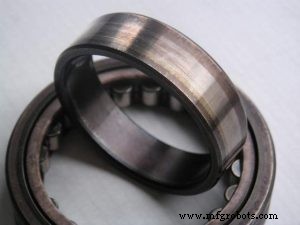
Burnishing is a precise deformation technique that refines a workpiece’s surface by rubbing it with a smooth tool. Although it’s less publicized than grinding or honing, burnishing offers unique benefits such as eliminating superficial defects and enhancing finish quality.
1. Burnishing Produces a Highly Smooth Finish
By sliding a polished tool across the material, burnishing compresses surface asperities, producing a finish that rivals that of traditional polishing. The degree of smoothness depends on applied pressure, material hardness, and tool geometry. In automotive components, for example, burnishing can reduce surface roughness from Ra = 1.6 µm to Ra = 0.2 µm.
2. Ball Burnishing: A Cost‑Effective Alternative
Unlike conventional burnishing tools, ball burnishing uses a hardened steel or ceramic ball that rolls over a channel or groove. The repeated motion plastically deforms the workpiece, creating a uniform finish. Manufacturers favor ball burnishing for its low tooling cost and minimal setup time compared to honing or polishing.
3. Burnishing Can Occur Unintentionally
In many machining operations, friction between a moving part and a stationary surface can inadvertently smooth the material—an accidental burnishing effect. While often overlooked, this phenomenon can influence surface integrity and must be accounted for in process planning.
4. Suitable for Both Plastics and Metals
Both polymers and metals respond to burnishing, but plastics deform more readily due to their lower yield strength. Consequently, operators must carefully control pressure and speed when burnishing thermoplastics to avoid excessive work hardening or distortion.
5. Integration with CNC for Precision Control
Modern CNC machines can be programmed to perform burnishing with exact pressure, speed, and path parameters, enabling high‑volume production of parts with consistent surface quality. While the initial investment is higher, CNC burnishing delivers repeatable results and reduces manual labor.
In summary, burnishing is a versatile deformation process that refines surface quality through controlled rubbing. Its adaptability to both manual and CNC environments makes it invaluable across industries.
Industrial equipment
- 6 Key Applications of Molybdenum – From Steel to Medicine
- 6 Expert Insights into Hinges: Design, Function, and Innovations
- 6 Key Facts About Rare‑Earth Magnets
- 6 Key Insights About Laser Engraving Technology
- 5 Key Facts About Turning in Manufacturing
- Stratasys F123 Series: Rapid, Quiet, and Cost‑Effective 3D Printing Innovation
- 15 Key Insights Into U.S. Manufacturing: History, Trends, and Impact
- Infographic: Essential Manufacturing Insights Revealed
- Mastering Metal Casting: From Molten Metal to Finished Parts
- Understanding Plastic Machining: Techniques, Tooling, and Material Considerations