



5 Key Facts About Turning in Manufacturing
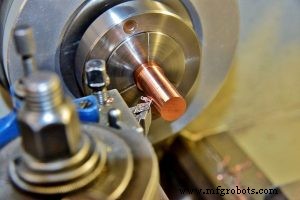
Turning is a foundational machining technique employed across manufacturing to shape metal parts. Unlike milling, it uses a stationary cutting tool that removes material from a rotating workpiece, gradually sculpting the final geometry. Here are five key facts that illuminate the importance and nuances of turning.
#1) Turning Employs One of the World’s Oldest Machining Tools
Turning is performed on a lathe – a horizontal machine that holds and rotates the workpiece while the tool stays fixed. Lathes date back to 1300 B.C., making them among the oldest precision tools in industrial history. Today, they remain indispensable for producing high‑quality shafts, spindles, and other cylindrical components.
#2) Turning Supports Diamond‑Tipped Cutting Tools
Advanced lathes can accommodate diamond‑tipped cutters, a technique known as diamond turning. Because diamond is the hardest known material, these tools excel at machining extremely hard alloys and precision optics, enabling the manufacture of laser gratings, telescope mirrors, and high‑end industrial lenses.
#3) Turning Generates Swarf (Chips)
During turning, the cutting tool removes small metal fragments known as swarf or chips. While a natural by‑product, swarf must be managed carefully to maintain a clean shop floor, reduce fire risk, and protect worker safety. Proper ventilation and debris collection are standard best practices in modern machining facilities.
#4) Turning Differentiates From Milling
Although both processes remove material, the mechanics differ: in turning the workpiece spins while the tool stays still; in milling the tool rotates against a stationary workpiece. This fundamental distinction influences tool life, surface finish, and the range of shapes each process can achieve.
#5) Three Core Turning Processes
Turning encompasses three primary operations:
- Tapered Turning – shapes a workpiece into a conical or tapered profile.
- Spherical Turning – forms hemispherical or spherical surfaces.
- Hard Turning – designed for extremely hard materials such as hardened steels, where conventional machining would fail.
Industrial equipment
- 5 Essential Insights About Gaskets: What You Need to Know
- 6 Expert Insights into Hinges: Design, Function, and Innovations
- 6 Key Facts About Rare‑Earth Magnets
- 6 Key Insights About Laser Engraving Technology
- 5 Key Insights About the Burnishing Process
- 6 Key Facts About Screwdrivers: History, Types, and Features
- 5 Key Facts About Milling Machines – History, Types, and Modern CNC Applications
- 15 Key Insights Into U.S. Manufacturing: History, Trends, and Impact
- Infographic: Essential Manufacturing Insights Revealed
- Top 5 Key Insights Into Calendaring: From Handcrafted Beginnings to Modern Applications