



6 Key Facts About Screwdrivers: History, Types, and Features
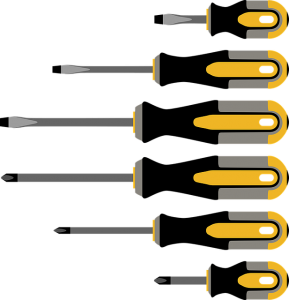
A screwdriver is a fundamental tool for installing, removing, tightening, or loosening screws. The long, wide shaft of the screwdriver engages the screw head, allowing rotation to adjust the screw’s position. While the basic design is familiar, the tool’s evolution and variety reveal fascinating insights.
#1) They Date Back to the Middle Ages
Archaeological findings confirm that screwdrivers have existed since the 15th century, with documented use in Germany and France. From these early origins, the tool spread across Europe and eventually worldwide, becoming indispensable in countless trades.
#2) Over Six Drive Types Are Supported
Although the Phillips head remains the most common, screwdrivers accommodate more than six distinct drive types. Besides Phillips, you’ll encounter flat‑head, Robertson, Supadriv, Fearson, and Japanese Industrial Standard (JIS) designs. Each drive type matches specific screw configurations, ensuring optimal torque and grip.
#3) Handles Come in Wood, Metal, or Plastic
Handle materials vary by intended use and user preference. Wooden handles offer a classic feel, metal handles provide durability for heavy‑duty tasks, and plastic handles often deliver ergonomic comfort and cost efficiency. The handle’s shape and grip directly influence control and precision.
#4) Manual and Automatic Options Exist
Manual screwdrivers require the user to turn the shaft by hand, offering full control and quiet operation. Automatic models—powered by electricity or batteries—deliver rapid, consistent torque, ideal for high‑volume or repetitive work. Choosing between manual and powered tools depends on task complexity and workflow demands.
#5) Magnetic Heads Enhance Efficiency
Some screwdrivers feature a magnetic tip that attracts and holds screws, reducing the risk of dropping or losing fasteners during removal. This magnetic assistance streamlines work, especially in tight or hard‑to‑reach spaces, and improves overall productivity.
#6) Popularity Gained During the Industrial Revolution
Despite their medieval roots, screwdrivers truly surged in demand during the first Industrial Revolution. Advances in screw manufacturing made fasteners more widespread, and the screwdriver became essential for the era’s mass production and assembly lines.
Industrial equipment
- 6 Key Insights Into Vanadium
- Tantalum: 5 Fascinating Facts About the High‑Temperature Refractory Metal
- 8 Fascinating Facts About Zirconium
- 6 Fascinating Facts About Nickel – History, Properties, and Global Impact
- 7 Expert-Backed Facts About Hafnium: Discovery, Properties, and Modern Applications
- 7 Fascinating Facts About Tungsten: From Discovery to Modern Applications
- Titanium Unveiled: 10 Key Facts About the World’s Most Versatile Metal
- 6 Expert Insights into Hinges: Design, Function, and Innovations
- 6 Key Facts About Rare‑Earth Magnets
- 6 Key Insights About Laser Engraving Technology