



8 Fascinating Facts About the Screw’s Historical Evolution
Ever wondered how the humble screw shaped our modern world? Until recently, I knew little about its story—until I delved into Witold Rybczynski’s 2000 book One Good Turn, A Natural History of the Screwdriver and the Screw.

Rybczynski’s journey began while researching a recent post on drive styles. Rather than a conventional review, I’ve distilled the book’s most striking revelations into eight key facts about the screw’s past.
1. Work‑man’s tools have roots that predate modernity.
From saws to planes to chisels, Rybczynski discovers that most of these essential tools were invented during the Roman era—or even earlier. The chisel, for example, traces back to the Bronze Age, illustrating the longevity of human ingenuity.
2. A screw’s threading is a helix, not a spiral.
Many conflate the two, but a helix is a three‑dimensional curve that twists around a cylinder at a constant angle, whereas a spiral expands outward from a fixed point. Even architectural features like spiral staircases are, in fact, helixes.
3. Ancient Greeks introduced the screw in presses.
Early applications appeared in olive and grape presses, where the screw mechanism delivered massive force with minimal effort. The same principle later powered the printing and paper presses of the Middle Ages.
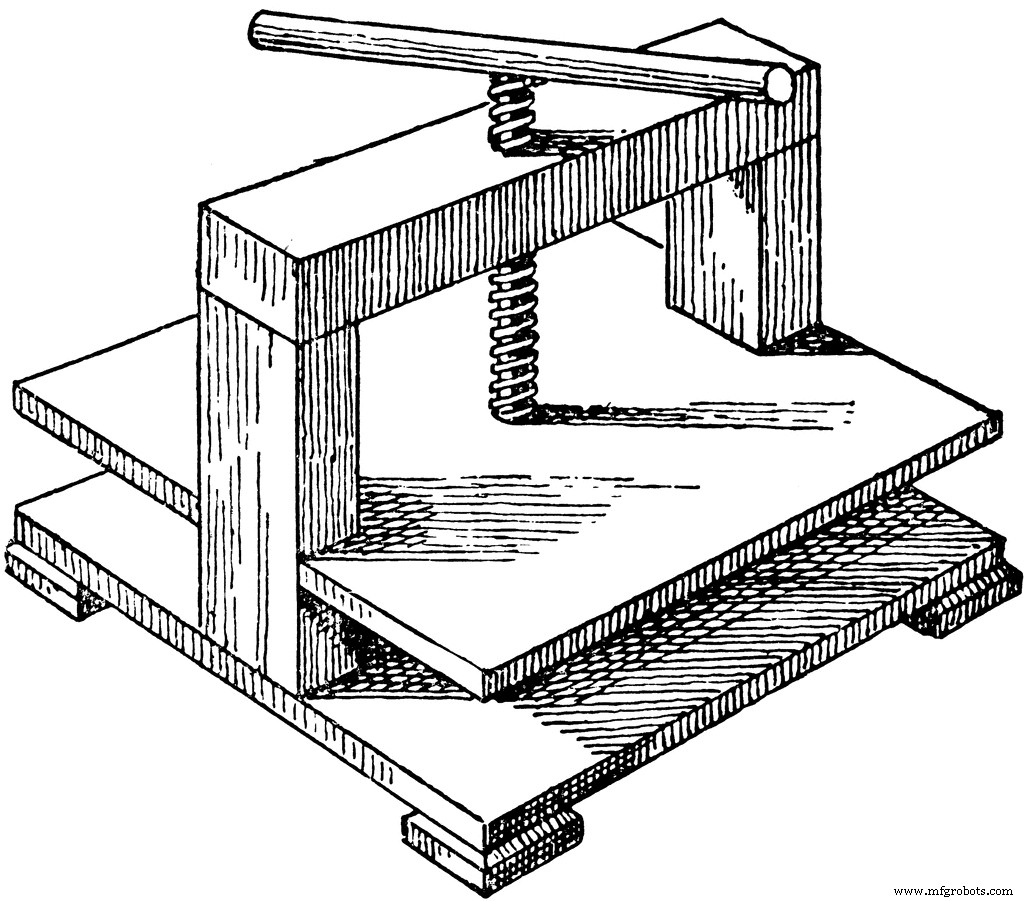
Consider a press with a one‑inch pitch screw turned by a three‑foot‑long handspike: a 40‑pound effort on the spiked lever translates to over nine thousand pounds of pressure on the fruit.
4. Early screws fastened military equipment.
In the early 16th century, firearms and armor were assembled with screws to withstand the vibration of firing. These screws were precision‑cut using a die called a screw plate after hammering a head and shank.
5. Screws were designed to hold thin materials together.
Unlike nails, which benefit from length, a properly installed screw can remain fixed indefinitely. Removing one without a screwdriver requires cutting away surrounding material.
6. Factory‑made screws emerged only in the mid‑1700s.
Prior to this, screws were hand‑carved. Families spent nights filing threads and cutting head slots, producing uneven, shallow‑threaded screws that were sold individually and at high cost.
7. The first screw factory faced financial failure.
In 1760, Job and William Wyatt patented a machine that could automate screw production. Though it reduced production time from minutes to seconds, the venture initially failed. Their successors, however, turned it profitable, producing 16,000 screws daily with a 30‑person team.
8. Tapered threads arrived only in 1842.
Early lathes couldn’t produce the tapered threads modern screws require, necessitating pre‑drilled holes. In the 1840s, American manufacturers patented machines capable of tapered threading, propelling the U.S. to the forefront of screw manufacturing.
Overall, Rybczynski’s book offers an engaging deep dive into the evolution of a tool that quietly holds our world together. For those curious to explore further, check out his work on the history of hand tools and machinery.
Want to learn more about screws and threads? Dive into our Guide to Thread Standards!

Resin
- 6 Key Applications of Molybdenum – From Steel to Medicine
- Understanding Screw Pitch vs Lead: Key Differences Explained
- 5 Key Insights About the Burnishing Process
- 6 Key Facts About Screwdrivers: History, Types, and Features
- Understanding the Anatomy of a Screw: Parts, Functions, and Applications
- The History and Mechanics of the Screw: From Ancient Inventions to Modern Applications
- Polycarbonate’s Rise: How a 1950s Innovation Shaped Modern Materials (Part 11)
- 15 Key Insights Into U.S. Manufacturing: History, Trends, and Impact
- Infographic: Essential Manufacturing Insights Revealed
- Key Insights into PACs vs PLCs: Essential Differences Explained