



Understanding Screw Pitch vs Lead: Key Differences Explained
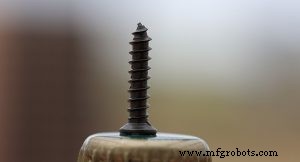
Screws remain one of the most reliable fasteners in both everyday DIY projects and precision engineering. A typical screw consists of a threaded shank, a head, and a tip. When selecting the right screw, you’ll often encounter two technical terms: pitch and lead. Both describe thread geometry, yet they measure different aspects of a screw’s performance.
What Is Pitch?
Pitch is the axial distance between the tops of two adjacent threads. In other words, it’s the space you would measure from the crest of one thread to the crest of the next. A screw with wide, spaced‑apart threads has a larger pitch; a screw with tightly packed threads has a smaller pitch. This measurement is standardized in ISO 261 and ANSI B1.1.
What Is Lead?
Lead refers to the linear distance a screw advances after a full 360‑degree rotation. If you were to turn a screw by one revolution, the lead tells you how far it would move into the material. High‑lead screws move faster and are common in applications that require rapid axial displacement.
Pitch vs Lead: The Distinct Roles
While pitch and lead both describe thread geometry, they answer different engineering questions:
- Pitch: Determines the spacing of threads—affects load distribution and thread strength.
- Lead: Determines how quickly a screw translates rotational motion into linear travel—affects speed of tightening or screw‑driven motion.
Most screws are single‑start, meaning the pitch equals the lead. In these cases, the thread path is a single helical track that advances one pitch per revolution. Multi‑start screws, however, have multiple helical paths. Their lead is greater than the pitch, resulting in faster axial movement for each turn.
When selecting screws for a specific task—whether you’re designing a linear actuator, building a wooden frame, or tightening a flange—checking both pitch and lead ensures you choose a fastener that meets both strength and performance requirements.
Industrial equipment
- Structural Screws: The Heavy‑Duty Fasteners Every Builder Trusts
- Wheels vs. Casters: Understanding the Key Differences
- O‑Rings vs. Gaskets: Understanding Their Roles and Key Differences
- Iron vs. Steel: Key Differences Explained
- What Are Machine Screws? A Comprehensive Guide
- Milling vs. Grinding: Key Differences Explained
- Understanding Countersunk Screws: Design, Applications, and Benefits
- Countersunk vs. Non‑Countersunk Screw Heads: How They Differ and When to Use Each
- Bolts vs. Screws: How to Choose the Right Fastener for Your Project
- DC vs. AC Motors: Key Differences and Choosing the Right One for Your Application