



Thread Forming vs Thread Rolling: Understanding Their Key Differences
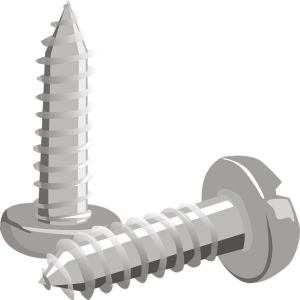
Screws are produced using two primary methods that shape their defining helical ridges: thread forming and thread rolling. Both processes create threading, but they differ in purpose, technique, and the part they affect. Below we break down each method and highlight the distinctions that matter in manufacturing and engineering.
What Is Thread Forming?
Thread forming is a precision process that creates internal threads inside a workpiece—such as a nut or a pre‑drilled hole—without cutting away material. A specialized tool, the thread‑rolling die, is pressed into the material by a machine. The die forces the metal into the helical shape, forming smooth, high‑strength internal threads that match the screw’s external thread.
Key benefits of thread forming include:
- Enhanced fatigue resistance because the material’s grain structure is not disturbed by cutting.
- Higher dimensional accuracy and tighter tolerances.
- Reduced tool wear compared to machining methods.
What Is Thread Rolling?
Thread rolling, a cold‑forming process performed near room temperature, produces external threads on a screw or fastener. The unthreaded screw is pressed against a pre‑shaped die, forcing the metal into the desired helix. Unlike thread cutting, rolling does not remove material, resulting in stronger, more durable threads that can withstand higher loads.
Thread rolling can accommodate a wide range of thread sizes and pitches. It is commonly used for high‑strength fasteners in automotive, aerospace, and construction applications.
Four Common Thread‑Rolling Techniques:
- Flat‑Die Thread Rolling
- Two‑Die Cylindrical Thread Rolling
- Three‑Die Cylindrical Thread Rolling
- Planetary‑Die Thread Rolling
In Conclusion
While both thread forming and thread rolling generate threaded surfaces, their roles are distinct: thread forming creates internal threads within a workpiece, whereas thread rolling forms external threads on a screw or fastener. Understanding these differences helps engineers choose the right process for optimal performance, durability, and cost efficiency.
Industrial equipment
- Thermoplastic vs. Thermoset: Understanding Key Differences in Polymer Materials
- Wheels vs. Casters: Understanding the Key Differences
- O‑Rings vs. Gaskets: Understanding Their Roles and Key Differences
- Forehand vs Backhand Welding: Key Differences and When to Use Each Technique
- Iron vs. Steel: Key Differences Explained
- Joining vs. Forming in Manufacturing: Key Differences Explained
- Milling vs. Grinding: Key Differences Explained
- Forging vs. Forming: How These Metalworking Processes Differ
- Washers vs. Gaskets: Key Differences Explained
- DC vs. AC Motors: Key Differences and Choosing the Right One for Your Application