



Forging vs. Forming: How These Metalworking Processes Differ
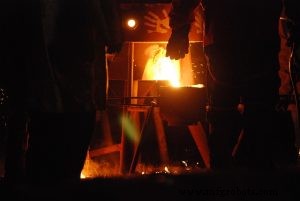
Forging and forming are foundational metalworking techniques used to reshape metals—from iron and steel to aluminum and bronze. While both manipulate metal, they differ fundamentally in method and outcome.
Forging: A Blast of Force
Forging applies controlled, high‑pressure blows—typically from hammers or presses—to deform a metal workpiece. The process dates back to the 1100s, when blacksmiths first used power hammers to shape metal. Modern forging encompasses several methods, each targeting a specific dimensional change:
- Drawn‑Out Forging – Extends the length of a component.
- Upset Forging – Reduces length while increasing diameter.
- Squeezed‑Compression Forging – Promotes multi‑directional material flow for complex shapes.
Because forging relies on impact forces, it enhances grain flow, improving mechanical properties and fatigue resistance.
Forming: Controlled Mechanical Deformation
Forming uses mechanical means—such as rolling, extrusion, stretching, or pressing—to reshape metal without adding or removing material. The mass of the workpiece remains constant; only its geometry changes. Forming can be classified by the type of stress applied:
- Compressive Forming – Loads push material together (e.g., rolling, extrusion).
- Tensile Forming – Loads pull material apart (e.g., stretching, recessing).
Because forming operates under controlled deformation, it is ideal for producing uniform cross‑sections and achieving tight dimensional tolerances.
Key Differences at a Glance
- Force Source – Forging uses impact blows; forming uses continuous mechanical pressure.
- Material Flow – Forging promotes grain flow and strengthening; forming focuses on shape fidelity.
- Typical Applications – Forging excels in heavy‑duty components (e.g., crankshafts); forming is preferred for sheet‑metal parts and extrusion profiles.
Conclusion
Both forging and forming shape metal, but forging’s impact‑based approach delivers superior strength, while forming’s steady deformation ensures precise geometry. Selecting the right process depends on the desired mechanical performance, dimensional accuracy, and material characteristics.
Industrial equipment
- Wheels vs. Casters: Understanding the Key Differences
- O‑Rings vs. Gaskets: Understanding Their Roles and Key Differences
- Joining vs. Forming in Manufacturing: Key Differences Explained
- Thread Forming vs Thread Rolling: Understanding Their Key Differences
- Phosphatizing in Metalworking: Process, Benefits, and Best Practices
- Hemming vs. Seaming in Metalworking: Key Differences and Applications
- Steel, Aluminum, and Brass Sheet Metal: Key Differences Explained
- Rubber Pad Forming: A Precise Metalworking Technique for Gentle Sheet Metal Shaping
- DC vs. AC Motors: Key Differences and Choosing the Right One for Your Application
- Metal Fabrication vs. Welding: Key Differences Explained