



Top 5 Key Insights Into Calendaring: From Handcrafted Beginnings to Modern Applications
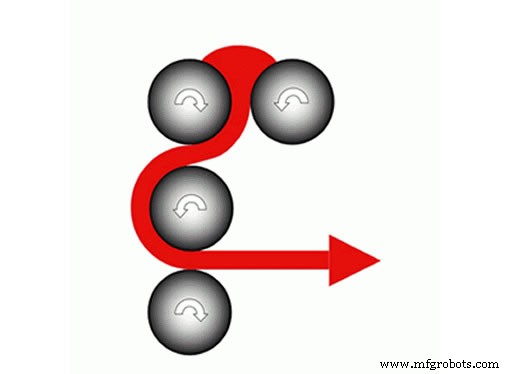
When most people hear the word “calendar,” they immediately envision a dated calendar featuring the months and days of the year. However, a calendar can also refer to a material-finishing machine used for calendaring. With calendaring, materials such as plastic, rubber or fabrics are pressed through the cylindrical rollers (see image to the left), which compresses the material while changing its physical properties in the process.
#1) It Was Originally Performed By Hand
Today, calendaring is performed almost exclusively using a complex arrangement of pressure rollers known as a calendar. During the 1700s, however, it was performed by hand. Back then, textile factors hired worker to manually press and roll textiles. Not by coincidence, these workers were called “calendars.”
#2) It Uses 500 to 5,000 PSI on Average
Calendaring exposes materials to extreme pressure, with an average of 500 to 5,000 pound per square inch (PSI). Generally speakers, softer materials require less pressure than stronger, harder materials. Paper, for example, is often calendared at just 500 PSI, whereas plastic and rubber requires greater pressure to fully compress. When performing calendaring, companies must use enough pressure to deform the material. Otherwise, the material won’t pass through the rollers of the calendar.
#3) It Can Create Different Finishes
Calendaring can be used to create a variety of finishes on textiles, some of which including the following:
- Beetled: Typically performed on cotton, beetled creates a semi-glossy texture resembling satin.
- Watered: Also known as moire, watered is a finish in which some of the threads are round while others are flattened.
- Embossed: Using custom rollers, embossed is a type of finish characterized by an engraved pattern or design.
- Shreiner: Finally, shreiner is a finish using rigid rollers to create a rib-like design.
#4) There Are ‘Super Calendars’
Calendaring is typically performed using a single calendar, though some companies use a set of calendars stacks on top of each other. Known as a super calendar, it uses rollers made of a soft material like cast iron. The purpose of super calendars is to create a smooth finish for paper-based textiles and materials using soft rollers.
#5) Calendars Were Invented in the 19th Century
While workers in China performed calendaring by hand during the 18th century, it wasn’t until the turn of the 19th century when machine calendars were invented. Around the mid-1800s, American engineer Edwin Chaffee invented a machine calendar consisting of four rollers, which he used to make rubber sheets. Prior to Chaffee’s invention, laborious manual work was required to make rubber sheets.
Industrial Technology
- 6 Key Insights Into Vanadium
- Tantalum: 5 Fascinating Facts About the High‑Temperature Refractory Metal
- 8 Fascinating Facts About Zirconium
- 5 Key Facts About Turning in Manufacturing
- 5 Key Facts About Milling Machines – History, Types, and Modern CNC Applications
- 15 Key Insights Into U.S. Manufacturing: History, Trends, and Impact
- Infographic: Essential Manufacturing Insights Revealed
- 5 Fascinating Facts About Tungsten: Naming, Melting Point, and More
- Laser Metal Printing: Key Facts for Precision Parts Manufacturing
- Top Steel Facts: Why It Remains the Most Reliable Construction Material