



5 Key Facts About Milling Machines – History, Types, and Modern CNC Applications
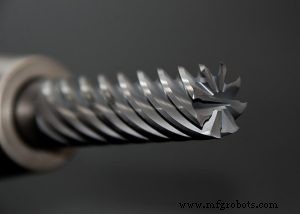
A milling machine is a precision manufacturing tool that uses a rotating cutter to shape a stationary workpiece. Unlike a lathe, which rotates the workpiece, the milling machine keeps the material still while the tool carves, drills, and contours it.
#1) Invented in the 1700s
The first true milling machine appeared in the 18th century. French engineer Jacques de Vaucanson patented a rotary file that closely resembled modern milling in 1745. Just a few decades later, Samuel Rehe built a functional prototype, cementing the milling machine’s place as a cornerstone of industrial fabrication.
#2) Horizontal or Vertical Alignment
Milling machines are generally classified by the orientation of their cutter: vertical or horizontal. A vertical mill positions the spindle upright, making it ideal for tasks like drilling, tapping, and cutting complex profiles. A horizontal mill aligns the spindle parallel to the worktable, offering greater stability for heavy cutting operations.
#3) Produces Swarf
During every cut, milling produces swarf – fine chips of metal that escape the cutter. These chips are a natural by-product of material removal and are routinely collected and recycled by manufacturers, reducing waste and saving costs.
#4) Cutting Speed Is Measured in Revolutions
The cutting speed, also called spindle speed, is measured in revolutions per minute (RPM). Optimizing RPM is critical: too low a speed can leave rough surfaces and prolong machining time, while too high a speed generates excess heat, potentially melting or warping the workpiece.
#5) CNC-Based Milling Machines
Today, most production mills are CNC-controlled. Computer-numerical-control systems allow operators to program complex toolpaths that the machine follows automatically, enhancing precision, repeatability, and throughput.
Industrial equipment
- 6 Expert Insights into Hinges: Design, Function, and Innovations
- 6 Key Facts About Rare‑Earth Magnets
- 6 Key Insights About Laser Engraving Technology
- 6 Key Facts About Screwdrivers: History, Types, and Features
- 5 Key Facts About Turning in Manufacturing
- Key Insights: Choosing the Right Batch Coding Machine for Your Business
- Essential Insights on Gluing Machines for Modern Manufacturing
- Versatile Milling Machines: Cutting, Drilling, and More
- 5 Key Insights Into Lathe Machines: What You Need to Know
- Top 5 Key Insights Into Calendaring: From Handcrafted Beginnings to Modern Applications