



5 Key Insights Into Lathe Machines: What You Need to Know
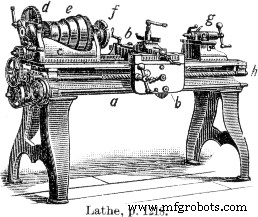
A lathe is a turning machine used to perform a variety of machining operations, including cutting, knurling, facing and drilling. The workpiece is secured inside the lathe, at which point it’s exposed to a rotating tool bit. As the tool bit presses into and rotates against the workpiece, it removes some of the workpiece’s material to create the desired size and shape. Even if you’re familiar with lathes, though, you may be surprised to learn the following five facts about them.
#1) They Were First Used in Ancient Greece
The modern lathe has origins dating back to Ancient Greece in the 13th or 14th century B.C. Of course, this was a very rudimentary lathe, consisting of nothing more than a workbench with a rotating rod. Nonetheless, it paved the way for newer, more modern lathes, most of which still use this same basic design.
#2) They Were Known As the ‘Mother of Machine Tools’
Throughout the Industrial Revolution, lathes were colloquially known as the “mother of machine tools” because they led to the creation of other machine tools. If it weren’t for lathes, perhaps other machine tools wouldn’t have been invented. The lathe became an invaluable tool among manufacturing companies during the Industrial Revolution, however, giving these companies ideas to create other tools, hence why they were called the “mother of machine tools.”
#3) Woodworking Lathes Can Perform Up to 1,400 Revolutions Per Minute
Woodworking lathes — lathe machines designed specifically for turning operations involving wood workpieces — can perform up to 1,400 revolutions per minutes. To put that number into perspective, most woodworking applications only require 1,000 revolutions per minute, making lathes a highly effective tool.
#4) Some Lathes Can Work Glass Workpieces
In addition to metal and wood, some lathes can work glass workpieces. Known as a glass-working lathe, they feature a similar design as traditional lathes. The key difference is that glass-working lathes expose glass to a flame that deforms its shape. The flame itself is static, but the glass rotates in front of it. Glass-working lathes are often used to create vases, wine glasses and other three-dimensional glass products.
#5) Duplicating Lathes Use a Pattern
Some manufacturing companies use a duplicating lathe to achieve a uniform shape with their workpieces. Also known as a copying lathe, it uses a pattern to achieve the same shape with each operation. Duplicating lathes were invented in the 1820s and have since become an essential tool used in the manufacturing industry.
If you liked this article you check out, “The Beginners Guide to Machine Turning Operations“.
Industrial Technology
- 6 Key Insights Into Vanadium
- Tantalum: 5 Fascinating Facts About the High‑Temperature Refractory Metal
- Molybdenum Uncovered: 7 Key Facts About the Versatile Refractory Metal
- 8 Fascinating Facts About Zirconium
- 6 Fascinating Facts About Nickel – History, Properties, and Global Impact
- 7 Expert-Backed Facts About Hafnium: Discovery, Properties, and Modern Applications
- 7 Fascinating Facts About Tungsten: From Discovery to Modern Applications
- Titanium Unveiled: 10 Key Facts About the World’s Most Versatile Metal
- CNC Lathes: History, Types, and Modern Applications
- 5 Fascinating Facts About Tungsten: Naming, Melting Point, and More