



Rhenium: 6 Fascinating Facts About This Rare, High‑Melting Metal

Rhenium: 6 Fascinating Facts About This Rare, High‑Melting Metal
Rhenium is a silver‑white transition metal in period 6 of the periodic table. One of the rarest elements in the Earth's crust, it boasts the second‑highest melting point and a boiling point that tops most metals. Below are six compelling insights into rhenium’s discovery, properties, reserves, extraction, applications, and recycling.
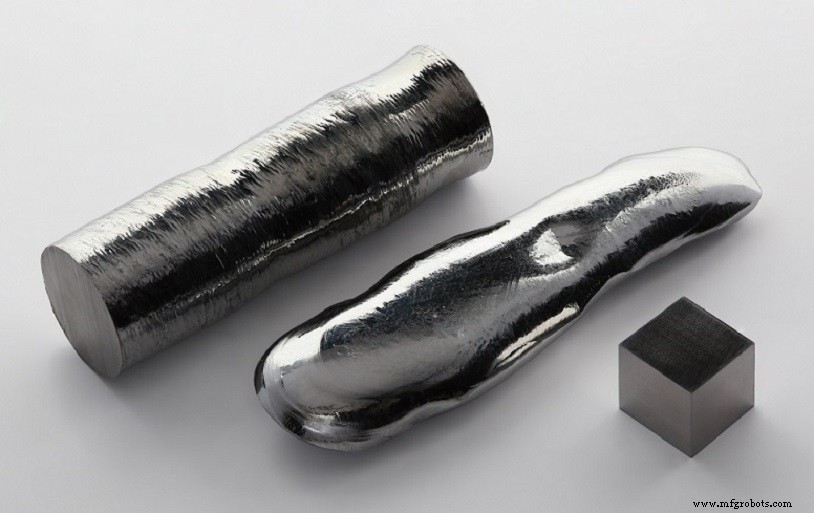
Facts About Rhenium
1. The Discovery of Rhenium
Rhenium was the last element with a stable isotope to be identified. In 1871, Dmitri Mendeleev predicted a “manganese‑like” element with an atomic weight near 190. German chemists Walter Noddack, Ida Noddack, and Otto Berg confirmed the element in 1925 by detecting it with X‑rays in platinum and niobium ore, naming it after the Rhine River. Subsequent analyses found rhenium in silicon‑beryllium‑yttrium and molybdenite; in 1928, 1 gram of rhenium was extracted from 660 kg of molybdenite.
2. Key Properties
- Color: silver‑white
- Melting point: 3,186 °C
- Boiling point: 5,596 °C
- Density: 20.53 g/cm³
- Extremely hard, wear‑resistant, and corrosion‑resistant
- Insoluble in hydrochloric acid; soluble in nitric acid to form perrhenic acid: 3Re + 7HNO₃ → 3HReO₄ + 7NO + 2H₂O
- Also dissolves in a hydrogen peroxide–ammonia solution to produce ammonium perrhenate: 2Re + 2NH₃ + 4H₂O₂ → 2NH₄ReO₄ + 3H₂
3. Reserves and Production
Rhenium is almost exclusively found alongside molybdenum, copper, lead, zinc, platinum, tantalum, niobium, and rare‑earth minerals, with molybdenite being the primary source. Proven global reserves, per the U.S. Geological Survey (2015), total about 1,100 tonnes—roughly 500 tonnes in the U.S. and 600 tonnes elsewhere. Global production in 2014 was approximately 48.8 tons, a slight dip from 48.9 tons in 2013. Chile dominated production (26 tons, 53 % of global output), followed by the United States (7.9 tons), Poland (7.6 tons), Uzbekistan (5.0 tons), and Armenia (0.3 tons). The U.S. is also the largest consumer of rhenium worldwide.
4. Extraction Techniques
The extraction route depends on the ore and desired end product. A typical process starts with creating a rhenium‑rich solution from the ore, then separating and purifying it to yield intermediate compounds. Final steps include hydrogen reduction, electrolytic refining, and halide thermal dissociation, followed by powder metallurgy to produce pure rhenium metal. Key stages are: ore preparation, separation of rhenium from molybdenum, synthesis of intermediate compounds, production of rough rhenium powder, and final refining and densification.
5. Applications
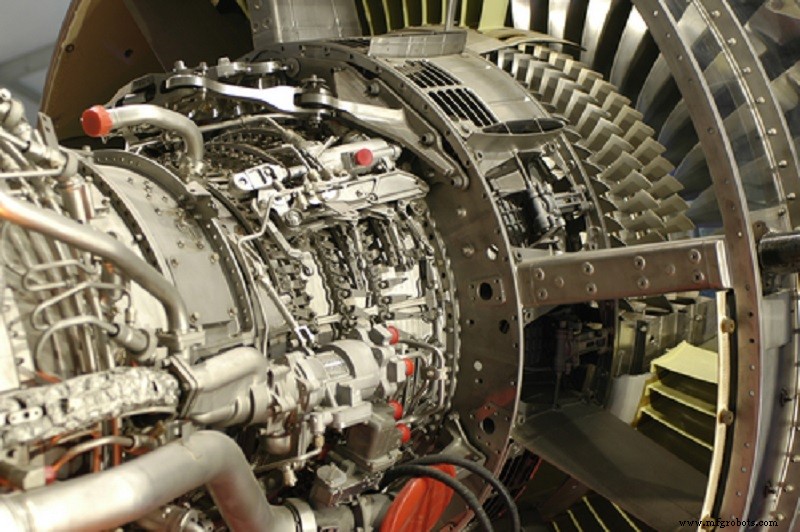
As a refractory metal, rhenium offers exceptional plasticity, mechanical strength, creep resistance, wear resistance, and corrosion resistance. It remains chemically stable with most gases except oxygen. Major uses include:
- High‑temperature aerospace components (e.g., jet engine turbines)
- Superalloy production for aerospace and power generation
- Electronics manufacturing (e.g., conductors, filaments)
- Petrochemical processes (e.g., catalysts for hydrocracking)
- Other high‑performance alloys in industry
According to U.S. Geological Survey data (2013), superalloys consumed about 80 % of the world’s rhenium, with catalysts accounting for the next largest share.
Facts About Rhenium
6. Recycling Outlook
Global recycling of rhenium is gaining traction. Germany, the United States, Estonia, and Russia are leading recyclers, primarily recovering rhenium from spent catalysts and alloy scrap. Roskill, a UK‑based metals consultancy, estimated global recycling capacity at roughly 30 tons per year (2010).
Conclusion
Thank you for exploring these intriguing aspects of rhenium. For deeper technical details and product inquiries, visit Advanced Refractory Metals (ARM), headquartered in Lake Forest, California, and a trusted supplier of rhenium and other refractory metals.
Metal
- 6 Key Insights Into Vanadium
- Tantalum: 5 Fascinating Facts About the High‑Temperature Refractory Metal
- Molybdenum Uncovered: 7 Key Facts About the Versatile Refractory Metal
- 8 Fascinating Facts About Zirconium
- 6 Fascinating Facts About Nickel – History, Properties, and Global Impact
- 7 Fascinating Insights About Chromium: From Discovery to Health Impacts
- 7 Expert-Backed Facts About Hafnium: Discovery, Properties, and Modern Applications
- 7 Fascinating Facts About Tungsten: From Discovery to Modern Applications
- Titanium Unveiled: 10 Key Facts About the World’s Most Versatile Metal
- 5 Fascinating Facts About Tungsten: Naming, Melting Point, and More