



5 Surprising Facts About Casters Every Professional Should Know
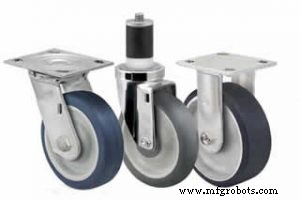
Casters simplify the movement of heavy or bulky items. By attaching a wheel to a mounting plate, they convert lifting into rolling, saving time and reducing strain. Though the concept is familiar, many users overlook the nuanced engineering behind these seemingly simple devices.
#1) Swivel Casters Are Over a Century Old
Swivel casters, which rotate 360°, have been in use for over a century. The first patented design was created by Seibert Chesnutt, and a modern patent was filed in 2020.
#2) Some Casters Feature a Locking Mechanism
Many casters—both swivel and fixed—include a locking mechanism that prevents movement when engaged. On uneven surfaces or ramps, this feature acts as a brake, keeping the load stationary and enhancing safety.
#3) Casters Suffer From ‘Flutter’
Flutter, also called shimmy, occurs when a caster oscillates side‑to‑side, compromising stability. The problem is mitigated by installing dampers—washers positioned around the swivel joint—to absorb motion.
#4) Lower Risk of Injury
Casters reduce the need for manual lifting, a common source of workplace injuries. By enabling rolling rather than hoisting, they lower the risk of back strains and other injuries that affect thousands of workers annually.
#5) Available in a Variety of Materials
Casters are engineered from multiple materials: the wheels are typically made of durable plastics or rubber, while the frames are forged from metal or alloy. This combination offers both resilience and load‑bearing strength.
Industrial equipment
- 5 Essential Insights About Gaskets: What You Need to Know
- 6 Expert Insights into Hinges: Design, Function, and Innovations
- 6 Key Facts About Rare‑Earth Magnets
- 5 Key Insights into Laser Cutting Technology
- 5 Key Facts About Chromium: From Stainless Steel to Stunning Reflectivity
- 5 Surprising Facts About Tungsten That Highlight Its Industrial Power
- 5 Key Insights About Rapid Prototyping
- 5 Insightful Facts About the Die Casting Process
- 10 Essential Insights Into Stainless Steel
- Top Steel Facts: Why It Remains the Most Reliable Construction Material