



5 Key Insights into Laser Cutting Technology
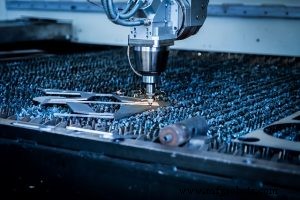
Manufacturing is evolving from traditional blade cutting to laser‑based solutions. Laser cutting employs a high‑energy beam to precisely vaporize or melt material, creating clean cuts with minimal heat‑affected zones.
#1. The Technology Dates Back Over 50 Years
Despite its futuristic reputation, laser cutting began in the mid‑1960s. Western Electric Engineering Research Center pioneered the first machine, successfully laser‑cutting tiny holes in diamond surfaces—demonstrating the process’s potential for ultra‑precise work.
#2. Some Systems Double as Laser Welders
Laser cutters come in three main categories: CO₂, Nd:YAG, and Nd‑based systems. Both CO₂ and Nd:YAG models can perform welding, enabling integrated cutting‑and‑welding workflows. Nd lasers, while excellent for non‑repetitive tasks, lack welding capability.
#3. Lenses Focus the Beam to 0.001‑Inch Spots
Optical lenses are critical, concentrating the laser energy into a spot as small as 0.001 inches (≈25 µm). This tight focus delivers the high power density needed for accurate, clean cuts across a wide range of materials.
#4. Power Consumption Is Significant
Commercial laser cutters typically convert only 5 %–45 % of input power into usable laser energy. The actual draw varies with machine type and settings, but laser cutting remains one of the more power‑intensive manufacturing methods. According to Wikipedia, the efficiency rating of commercial machines ranges from 5 % to 45 %.
#5. Gas‑Assisted Techniques Expand Material Capabilities
“Melt‑and‑blow” is a common gas‑assisted approach where pressurized gas removes molten material as the laser cuts. It’s especially effective for metals such as steel, aluminum, iron, and titanium, improving cut quality and reducing edge burrs.
Industrial equipment
- 5 Essential Insights About Gaskets: What You Need to Know
- 5 Key Facts About Chromium: From Stainless Steel to Stunning Reflectivity
- 6 Key Insights About Laser Engraving Technology
- 5 Surprising Facts About Tungsten That Highlight Its Industrial Power
- 5 Key Insights About Rapid Prototyping
- 5 Insightful Facts About the Die Casting Process
- 5 Surprising Facts About Casters Every Professional Should Know
- Precision Laser Cutting: Advanced Material Cutting for Industry, Small Businesses, and Hobbyists
- Laser Metal Printing: Key Facts for Precision Parts Manufacturing
- Top Steel Facts: Why It Remains the Most Reliable Construction Material