



Why Bolts and Nuts Are Hexagonal: The Engineering Behind the Shape
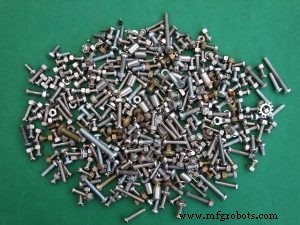
In the world of fasteners, the hexagon is the de‑facto standard. From furniture and appliances to automotive chassis and structural steel, hexagonal bolts and nuts are everywhere. But why has this six‑sided shape become the universal choice?
Precision and Torque Efficiency
Hexagonal fasteners provide six flat faces that allow a wrench or socket to engage at precise angles. Turning a hex bolt by 30° moves the tool from one flat face to the next, offering a smooth “click” that helps prevent cross‑driving and ensures consistent torque application. In contrast, a square fastener would require a 90° turn to align with its next face—four times the effort and more room for error.
With only six sides, hexagonal bolts strike a balance between mechanical strength and workability. Adding more faces would increase complexity and risk fracture under load, while fewer faces would reduce torque efficiency.
Global Standardization
International standards such as ISO 7048, DIN 934, and ANSI B18.2.1 specify hexagonal shapes for bolts and nuts, ensuring interchangeability across industries and borders. This uniformity means a single tool set can work on any hex fastener, simplifying inventory, training, and maintenance worldwide.
Real‑World Impact
In construction, manufacturers rely on hex bolts to assemble everything from modular framing to heavy machinery. The shape’s inherent strength, combined with the ease of hand or power‑tool tightening, reduces labor time and improves safety. The 30° turning angle also minimizes wear on both the tool and the fastener, extending their service life.
Conclusion
Hexagonal bolts and nuts dominate the market because they combine engineering efficiency, ease of use, and worldwide compatibility. Their six‑sided geometry offers the optimal trade‑off between strength and operational convenience, making them indispensable in modern manufacturing and construction.
Explore Monroe’s Bolts & Nuts for a comprehensive selection of high‑quality hex fasteners.
Industrial equipment
- Molybdenum Rods: Types, Applications, and Care
- Cobalt Alloys: Composition, Key Properties, and Industrial Applications
- Understanding Textile Dyes and the Dyeing Process
- Kevlar Demystified: Composition, Applications, and Benefits
- Bolts vs. Screws: How to Choose the Right Fastener for Your Project
- Applications and Properties of Manganese Steel: A Comprehensive Overview
- Red vs. Yellow Brass: Composition, Uses, and Key Differences
- Connected Manufacturing: What It Is & Its Key Benefits
- Conveyor Handling: Essential Dos & Don’ts for Optimal Performance
- Polystyrene Insulation: Pros, Cons, and Key Considerations